Where Should You Actually Start With Financial Reporting?
Financial reporting skills are increasingly in demand — but knowing where to begin can be tricky. Here are the best courses, free resources, YouTube channels, and books to build real financial reporting skills.
Hire the developers behind TutorialSearch.io
We built this site — full-stack web apps, AI integration & automation. Tell us what you need and we'll build yours.
Financial reporting is the language companies use to say "here's what we're worth, here's what we earned, here's where the money went." But if you're new to it, the learning landscape can feel like arriving at a conference where everyone's speaking a different dialect.
GAAP or IFRS? Balance sheet basics first, or dive straight into ACCA prep? Should you take a structured course or just start reading 10-K filings on SEC EDGAR?
The right answer depends on where you're headed. This guide cuts through the noise. You'll find the best financial reporting courses on TutorialSearch.io, plus free tools, YouTube channels, books, and communities that are worth your time.
Key Takeaways
- Financial reporting is how companies communicate financial health to investors, lenders, and regulators — using three core documents
- GAAP is the US standard; IFRS is used in 140+ countries — knowing both expands career options significantly
- The fastest path starts with mastering the income statement, balance sheet, and cash flow statement
- Free resources from the IFRS Foundation, CFI, and AccountingCoach cover the fundamentals without any cost
- The 365 Careers Udemy course delivers the strongest paid foundation for most learners
In This Article
- Your Financial Reporting Starting Point
- Financial Reporting Courses Worth Investing In
- Free Financial Reporting Resources That Hold Up
- Financial Reporting YouTube Channels Worth Your Time
- Financial Reporting Books for the Long Haul
- GitHub and Practice Tools for Financial Reporting
- Financial Reporting Communities Worth Joining
- Related Finance Skills to Explore
- Frequently Asked Questions About Financial Reporting
Your Financial Reporting Starting Point
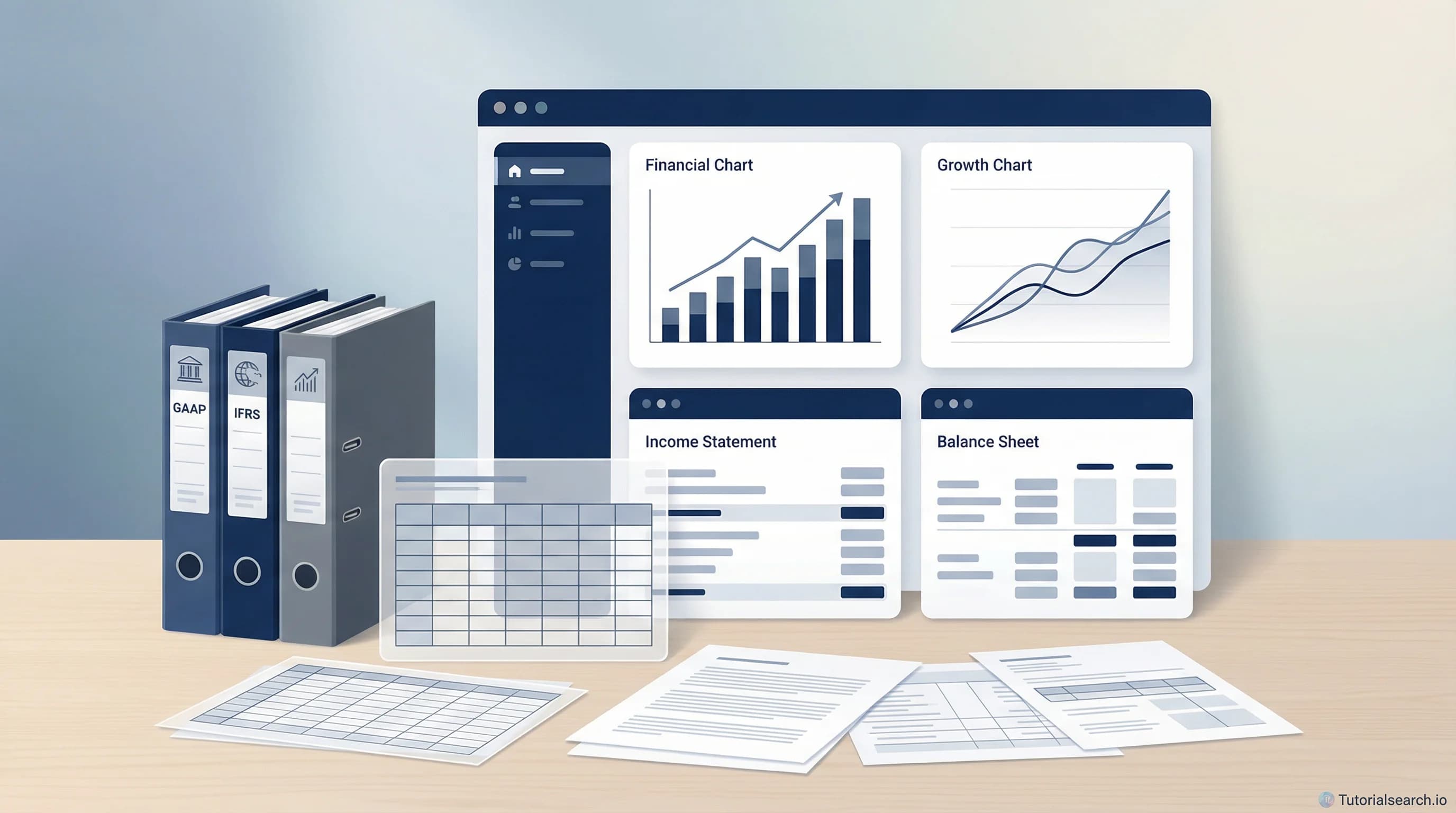
Financial reporting is the structured process of preparing and presenting a company's financial performance. It centers on three core documents:
- Income Statement — shows revenue, expenses, and profit over a period
- Balance Sheet — shows what a company owns, owes, and what remains for shareholders
- Cash Flow Statement — shows where cash came from and where it went
Together, these three statements tell the story of a business. If you can read them fluently, you can evaluate almost any company — whether you're an analyst, investor, manager, or preparing for the CPA or ACCA exams.
The first decision most learners face is whether to focus on GAAP (Generally Accepted Accounting Principles, used in the US) or IFRS (International Financial Reporting Standards, used in 140+ countries). If you're working at a US company or pursuing CPA certification, start with GAAP. If your career is global — or you're in Europe, Canada, or Asia — IFRS is probably more relevant.
The concepts overlap significantly. Learn one well, and picking up the other takes far less time than you'd expect.
Here's a quick decision guide for where to start:
| Your Goal | Recommended Starting Framework |
|---|---|
| CPA exam prep (US) | US GAAP |
| ACCA / DipIFR certification | IFRS |
| Corporate finance career (global) | IFRS |
| Investment analysis / equity research | Both |
| Understanding annual reports in any market | IFRS |
One thing most beginners get wrong: they try to memorize every accounting standard before reading a single actual report. Don't do this. Read a real 10-K (US companies post these on SEC EDGAR) or an annual report from a company you know, while working through a course. That context makes everything stick.
I remember printing out Apple's 10-K the first time I studied financial statements. Half the terminology went over my head. Then I started reading it alongside AccountingCoach and a good introductory course, cross-referencing terms as they appeared. Within a week, I could see exactly where each line came from. That's the method.
Financial Reporting Courses Worth Investing In
These are the courses worth actual money — not an exhaustive list, but the ones with real substance.
1. Financial Reporting & Analysis: Complete Preparation — 365 Careers [Editors' Choice]
This is the most popular financial reporting course on the platform, and it earns that position. Over 21,000 students have taken it. 365 Careers is one of the most consistent finance education teams working in online learning today. You'll cover full income statement, balance sheet, and cash flow analysis — plus ratio analysis and financial modeling integration.
The instruction quality is high, the pacing is well-managed, and there's enough real-world data that you're not just memorizing definitions. Rating: 4.6/5.
If you want a solid foundation that prepares you for a finance role, this is where I'd start.
2. International Financial Reporting Standards (IFRS) — Rowan Malherbe
Nearly 3,000 students have worked through this one. It focuses specifically on IFRS — useful for anyone working outside the US or preparing for global certifications. The course covers the IFRS conceptual framework, recognition and measurement principles, and key standards. If you're targeting the DipIFR exam or working with multinational companies, this is one of the better-structured IFRS courses available. Rating: 4.3/5.
3. Tableau Financial Reporting & Financial Analysis Masterclass — Irfan Sharif ACA ACCA [Editors' Choice]
Most financial reporting courses treat data visualization as an afterthought. This one doesn't. It combines financial reporting concepts with Tableau — so you're learning how to build the dashboards and reports that finance teams actually use in practice.
Irfan Sharif is a qualified accountant (ACA, ACCA), which means the accounting content is solid. This isn't just "here's how to drag charts around." It's financial reporting with a modern delivery layer built in. 2,500+ students, 4.6 rating.
Everyone recommends learning financial reporting in Excel. That's fine. But Tableau is increasingly what finance teams use for executive-facing reports. This course bridges that gap in a way that most courses miss entirely.
4. AI For Accounting Pros: Financial Statement Analysis & Audit
This one surprised me. Nearly 1,750 students and a near-perfect 4.9 rating. It focuses on how AI tools are changing financial statement analysis and audit — a genuinely relevant angle as companies adopt ML models for anomaly detection and automated disclosures.
If you already have accounting basics down, this course helps you get ahead of where financial reporting is heading.
5. ACCA Financial Reporting F7 Past Papers Complete Guide — James Wright
A specialist resource for ACCA exam candidates. The F7 paper covers financial reporting under IFRS, and working through past papers is the most efficient exam prep strategy available. James Wright breaks down past paper questions methodically. Small enrollment (37 students) but a strong 4.8 rating from a focused audience.
You can explore all 189+ courses in this area on the financial reporting topic page — sorted by rating, level, and platform.
Free Financial Reporting Resources That Hold Up
Not everything worth learning costs money. These free resources are genuinely useful — not just "free but dated."
IFRS Foundation Learning Materials (Official)
The IFRS Foundation itself offers educational materials, webcasts, and guides directly on their website. If you want authoritative information on IFRS standards — from the people who write them — this is it. The full standards are behind a subscription, but the educational summaries and introductory materials are free.
Corporate Finance Institute (CFI) — Reading Financial Statements (Free Course)
CFI's free introductory course on reading financial statements is one of the cleaner free options available. It walks through the income statement, balance sheet, and cash flow statement with real-company examples. Takes about 3 hours. A useful entry point before diving into paid courses or certification prep.
This site has been running since 2003 and it's still one of the best free accounting reference resources online. Clear explanations of financial reporting concepts, practical examples, and quizzes to test your understanding. The paid "PRO" version adds practice exams, but the free content alone is extensive. Great for filling specific knowledge gaps mid-study.
Class Central — Free IFRS Course (Higher School of Economics)
A free MOOC that introduces IFRS basics from an academic institution. It covers the principles, conceptual framework, and key standards. If you want a structured intro to IFRS without spending anything, this is worth a few hours. You can audit it at no cost.
SEC EDGAR (Practice Tool)
This isn't a tutorial — it's a practice tool. EDGAR is the SEC's filing database, where every US public company posts its 10-K, 10-Q, and other financial reports. Reading real filings from companies you know (Apple's 10-K is a classic teaching example) builds faster intuition than textbook examples. Free, always current, and arguably irreplaceable.
Khan Academy Accounting & Finance
Free, self-paced, and thorough for a general audience. Khan Academy's accounting and finance section covers basic financial statements, debits and credits, and foundational financial analysis. Best for complete beginners before taking a more structured course.
Investopedia Financial Analysis Section
Not structured as a course, but excellent as a reference — especially for looking up specific ratios, accounting standards, or terms mid-study. The financial statements explanations are clear and regularly updated.
If financial reporting connects to your career goals, you might also want to look at Financial Analysis courses — they build directly on the reporting skills you're developing.
Financial Reporting YouTube Channels Worth Your Time
Hire the developers behind TutorialSearch.io
We built this site — full-stack web apps, AI integration & automation. Tell us what you need and we'll build yours.
YouTube has become a legitimate learning platform for accounting and financial reporting. These channels are consistent and technically accurate.
Accounting Lectures by Farhat (YouTube)
Over 1,900 videos covering financial accounting, managerial accounting, CPA prep, and more. Professor Farhat's teaching style is clear and methodical — he works through problems step by step. The channel is particularly strong on US GAAP and CPA exam content. If you want depth and volume, this is your channel.
The Accounting Professor — Bennet Tchaikovsky (YouTube) [Editors' Choice]
Bennet is a CPA and full-time accounting professor. His videos on financial statement preparation, ratio analysis, and the accounting cycle are well-organized. He explains the why behind accounting standards — not just the mechanics. If you want to understand concepts rather than just pass exams, start here.
Else Grech Accounting (YouTube)
A strong channel for intermediate learners. Covers financial accounting fundamentals through management accounting, with a focus on exam preparation for ACCA, CIMA, and similar qualifications. Clear, well-structured content.
365 Financial Analyst YouTube Channel (YouTube)
The YouTube companion to the 365 Financial Analyst courses. Good for conceptual overviews and practical financial analysis techniques. High production quality makes it easy to follow complex topics. Also a useful preview before committing to their paid courses.
Financial Reporting Books for the Long Haul
Courses give you structure. Books are how you actually internalize a subject.
Financial Statements: A Step-by-Step Guide — Thomas Ittelson [Editors' Choice]
This is the book I'd give someone with no accounting background who needs to understand financial statements quickly. Ittelson builds the statements from scratch — transaction by transaction — so you see exactly how each line item comes from real business activity. It's not exam prep. It's the best foundation book for anyone new to financial reporting. Clear, practical, short.
Financial Intelligence — Karen Berman & Joe Knight
Written for business managers, not accountants. If you want to understand what financial reports actually tell you — and what they don't — this is the book. Berman and Knight explain the "art of accounting": the judgment calls and estimates behind the numbers that most courses skip entirely. A great second book after you've covered the basics.
Accounting Made Simple — Mike Piper
Under 100 pages. Covers the accounting equation, financial statements, and key accounting principles. If you want to understand the foundations in a single afternoon, this works. It won't replace a full course, but it's a reliable mental model builder.
The reference text for serious IFRS practitioners. Comprehensive, authoritative, and expensive — but if you're working in international accounting at a professional level, you'll reach for it regularly. Not for beginners, but worth knowing about as you advance.
For those building toward the analytical side, Investment Strategies courses and Financial Planning courses pair naturally with financial reporting knowledge.
GitHub and Practice Tools for Financial Reporting
There's less financial reporting content on GitHub than you'd find for programming topics — but a few resources are worth bookmarking.
GitHub: financial-reporting topic
Browse the financial-reporting and financial-accounting topics on GitHub. You'll find open-source accounting software, research tools, and financial data projects — useful for seeing how financial data maps to real systems.
Bigcapital (Open Source — GitHub)
An open-source accounting and financial reporting platform with an active community. Exploring its codebase and data models gives you a concrete sense of how financial statements map to real data structures. AGPL-licensed, self-hostable, and a useful learning sandbox if you want to understand reporting systems from the inside.
A curated list of financial libraries, resources, and tools — including financial reporting-adjacent tools for data analysis, modeling, and automation. Worth browsing if you want to extend reporting skills with programming or automation.
For a broader view of the Finance & Accounting field, explore all courses in the category — from bookkeeping fundamentals to advanced financial modeling and beyond.
Financial Reporting Communities Worth Joining
Learning alone is slower than learning with people who are a few steps ahead of you.
r/Accounting (Reddit, ~350,000 members)
One of the largest accounting communities online. Covers technical accounting questions, career advice, exam prep, and professional development. Active daily, with regular threads on GAAP vs IFRS differences, specific reporting standards, and job market questions.
AccountingWEB (Forum, 500,000+ members)
Strong UK focus but with wide international relevance. The forums cover technical reporting questions, regulatory updates, and software tools for financial reporting teams. Good for staying current on standard changes and practical application questions.
Proformative (Corporate Finance Community)
More focused than AccountingWEB — this is for corporate finance professionals rather than public practitioners. Discussions tend to cover financial reporting strategy, audit prep, and FP&A integration. Quality-moderated, which keeps the signal high.
IFRS Community (IFRS Foundation)
For practitioners working specifically under IFRS standards. The foundation maintains forums and discussion resources where members get updates on standard changes, practical implementation guidance, and technical interpretations.
If you're building toward a broader finance career, Business Finance courses and Accounting Fundamentals courses are the natural next steps after financial reporting.
Related Finance Skills to Explore
Financial reporting sits at the center of finance — these skills pair directly with it:
- Financial Analysis — takes reporting data and turns it into decisions. The analytical counterpart to financial reporting.
- Accounting Fundamentals — the mechanics of debits, credits, and the accounting cycle that feed into every financial report.
- Business Finance — broader context for how financial reporting fits into company-wide financial management.
- Financial Planning — forward-looking; financial reporting is the backward-looking half of the same coin.
- Investment Strategies — investors rely heavily on financial reports; understanding both sides makes you more effective at either.
- Trading Analysis — often starts with earnings reports and financial statement interpretation.
- Trading Strategies — understanding how financial data drives market decisions.
- Personal Finance — financial reporting concepts translate directly to managing your own financial picture.
Frequently Asked Questions About Financial Reporting
How long does it take to learn financial reporting?
Most people can read and interpret basic financial statements within 20–40 hours of focused study. Getting comfortable with GAAP or IFRS well enough for a professional role typically takes 3–6 months of coursework and practice. Formal certifications (CPA, ACCA) take longer — 12–24 months — but financial reporting is a core component of both.
Do I need an accounting degree to learn financial reporting?
No. Many financial analysts, investors, and business managers learn financial reporting through self-study and online courses with no formal accounting education. What matters is understanding the concepts and developing the habit of reading actual financial statements. Start with a structured course like 365 Careers' complete preparation, and supplement with real company filings from SEC EDGAR.
What's the difference between GAAP and IFRS in financial reporting?
Both are accounting frameworks — sets of rules that govern how companies prepare financial statements. GAAP is used primarily in the US. IFRS is used in 140+ countries. The core documents exist under both frameworks, but the specific rules for recognizing revenue, valuing assets, and making disclosures differ. For a global career, IFRS is worth learning. For US-focused roles, GAAP is your starting point.
What is financial reporting actually used for?
Financial reporting gives stakeholders — investors, lenders, regulators, and management — a standardized view of a company's financial performance and position. Investors use it to evaluate companies. Lenders use it to assess creditworthiness. Regulators use it to check compliance. Management uses it to make operating decisions. You can read more about financial reporting careers and topics here.
Can I get a job with financial reporting skills?
Yes. Financial reporting is a core skill for roles including financial analyst, FP&A analyst, accountant, auditor, controller, and CFO. It's also valued in investment banking, equity research, and corporate strategy. The stronger you can combine reporting knowledge with analytical skills and modern tools like Tableau or AI-assisted analysis, the more competitive your profile becomes.
Financial reporting is one of those skills that looks intimidating from the outside but becomes approachable quickly once you have the right entry point. The three financial statements aren't that complicated. Once you can read them fluently, you see every business differently.
Start with a structured course to get the framework. Practice on real company filings. Pick up the books when you want to go deeper. Everything you need is here.