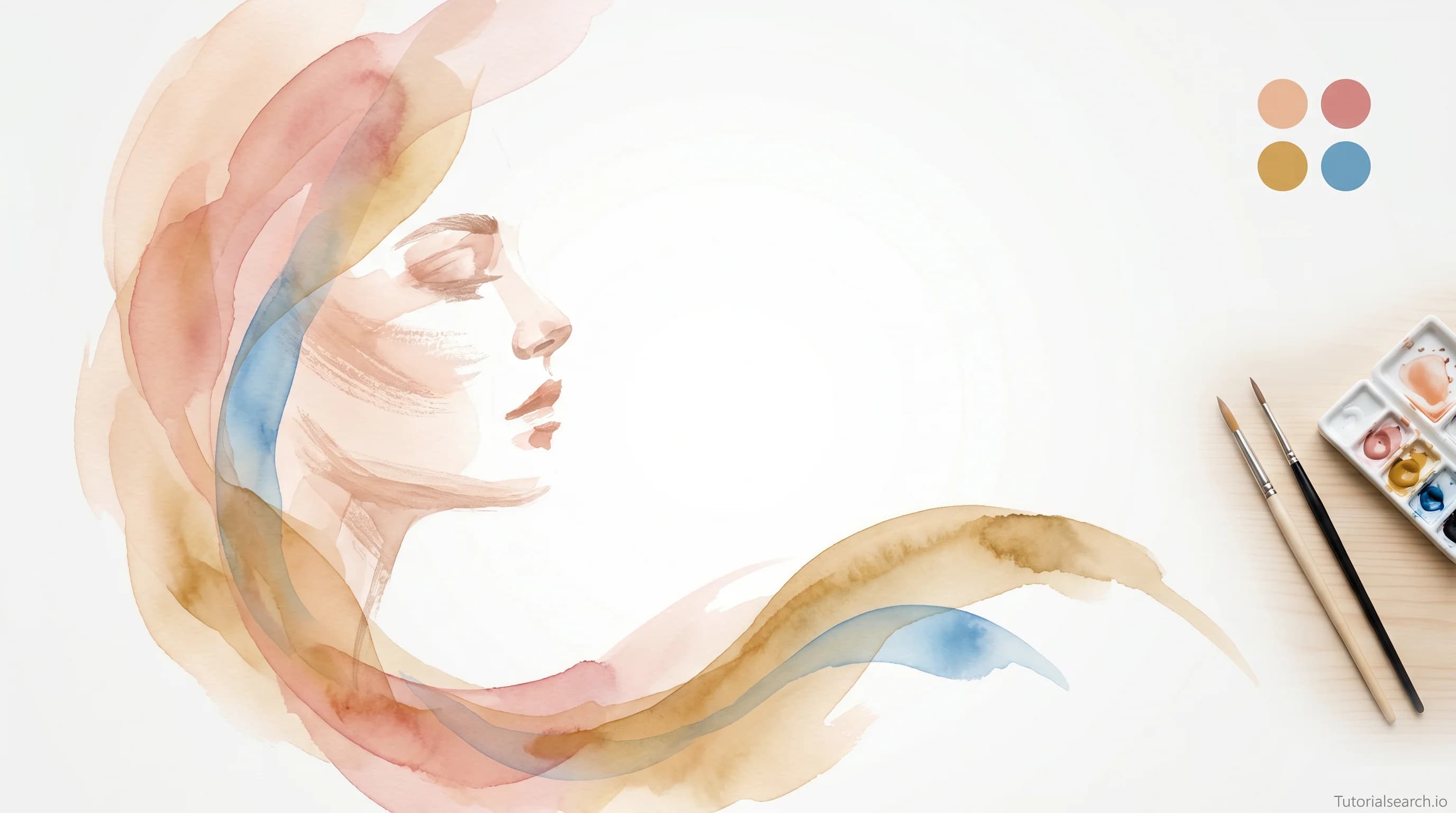
Watercolor Portraits: A Curated Roadmap From First Face to Confident Likeness
Want to paint luminous watercolor portraits? This guide curates the best courses, free tutorials, YouTube channels, and books for learning watercolor portrait painting in 2026.
Hire the developers behind TutorialSearch.io
We built this site — full-stack web apps, AI integration & automation. Tell us what you need and we'll build yours.
Watercolor portraits have a way of stopping people mid-scroll — that luminous glow, the way light seems to radiate from the skin itself. If you've ever wanted to capture a face in watercolor but felt intimidated by skin tones, likeness, or keeping your washes fresh, you're in the right place. This guide is your curated roadmap to learning watercolor portraits in 2026, from your very first face sketch to building confident, expressive likenesses. Start by exploring the 65+ watercolor portrait courses on TutorialSearch to get a feel for the full range of instruction available.
Key Takeaways
- Watercolor portraits rely on layered transparent washes — you build luminous skin tones by working light to dark, not the other way around
- Mastering watercolor portrait painting starts with accurate values, not perfect color mixing — tone does more work than hue
- The best watercolor portrait courses teach wet-on-wet and wet-on-dry techniques together, because real faces need both
- Free resources like Watercolor Academy and YouTube channels can take you surprisingly far before investing in a paid course
- Consistent daily practice on small, quick face sketches builds skill faster than laboring over one "perfect" painting
In This Article
All sections below draw from the TutorialSearch watercolor portrait catalog — jump to whichever section is most relevant to where you are right now.
- The Watercolor Portrait Courses I'd Actually Recommend
- Free Watercolor Portrait Resources That Are Genuinely Worth Bookmarking
- YouTube Channels for Watercolor Portrait Painting Worth Watching
- GitHub Repos and Digital Tools for Watercolor Portrait Artists
- Watercolor Portrait Books That Actually Teach You Something
- Where Watercolor Portrait Artists Gather Online
- Beginner vs. Intermediate: Which Watercolor Portrait Path Is Right for You?
- Related Watercolor Portrait Skills Worth Exploring
- FAQ
The Watercolor Portrait Courses I'd Actually Recommend
There are hundreds of watercolor portrait courses out there, and most of them teach you the same generic wet-on-wet demo before abandoning you at the nose. These are different — each one teaches something specific that actually improves your work.
1. Watercolor Portraits: Mastering Values & Color — Painting Realistic Faces (Skillshare) by Tanja Jensen
[Editors' Choice] This is the course I'd hand to anyone who has already painted something and wants to stop guessing. Tanja Jensen doesn't just demonstrate — she explains why values shape a face more than color does, and her approach to building skin tone in transparent layers is the clearest I've seen. Her methodology is rigorous without being joyless. If you complete this one and nothing else, you'll understand faces better than when you started. Jensen also appears later on this list — her methodology is consistent across everything she teaches.
2. Rhythms of Color: Painting Expressive Watercolor Portraits with Passion (Skillshare) by Will Elliston
[Editors' Choice] Where Tanja Jensen's course is systematic, Will Elliston's is intuitive and expressive. He teaches you to loosen up — to chase energy in a face rather than accuracy. If you've been painting stiff, overworked portraits, this is the antidote. The 690 students who rated it five stars aren't wrong. It pairs beautifully with the Jensen course: take both if you want structure and spontaneity.
3. Watercolor Portraits for Everyone: Paint a Beautiful Face with 4 Colors (Skillshare)
A 4.92 rating with a genuinely useful constraint: four colors only. Limiting your palette forces you to stop fussing over mixing and start paying attention to where the light actually falls. This is the best beginner entry point on this list — it doesn't feel dumbed down. After completing it, the 1,095 watercolor illustration courses on TutorialSearch are a natural next step to apply your new skills beyond the face.
4. Perfect Portraits: Painting Faces and Skin Tones in Watercolor with Ease (Skillshare)
[Editors' Choice] Skin tones are the hardest part of watercolor portraiture for most people — there's a narrow margin between a convincing complexion and something that reads as muddy or sickly. This course tackles that directly. It's focused, practical, rated 4.76 stars, and fills a gap that most portrait courses skip entirely.
5. Ink & Watercolor Portrait Made Easy #2 | Smiling Dark Skin Woman (Skillshare) by Elisabetta Furcht
Most portrait courses default to lighter skin tones, which is a genuine gap in the genre. This beginner-friendly course by Elisabetta Furcht focuses specifically on painting dark skin with ink and watercolor — a beautiful combination, and an underrepresented subject. The ink provides structure that makes watercolor washes more forgiving for beginners.
6. Watercolor Portrait: Painting Aged Skin — Lines & Wrinkles (Skillshare) by Tanja Jensen
Older faces are actually more interesting to paint than young faces because the character is already written in the skin. Texture, wrinkles, and age spots require specific layering techniques, and Jensen handles them with the same clarity she brings to everything. A natural next step after her values course.
Free Watercolor Portrait Resources That Are Genuinely Worth Bookmarking
Here's the contrarian take: you don't need to spend money to get started with watercolor portraits. The free web has enough structured instruction to take you from zero to a competent beginner — and some of these resources are genuinely better than paid alternatives I've tried.
Watercolor Academy — Free Lessons (watercoloracademy.com)
Watercolor Academy has a genuinely useful free tier with lessons from four professional artists — Vladimir London, Natalie Richy, Ilya Ibryaev, and Anna Ivanova — whose work has appeared in international exhibitions. Their portrait lesson covers the dry-brush-on-moist technique and the multilayer approach clearly, without selling you on a paid upgrade in every paragraph. Worth bookmarking.
Painting Portrait Tips by Ben Lustenhouwer (paintingportraittips.com)
Ben Lustenhouwer's in-depth watercolour portrait tutorial explains one of the most important conceptual flips for beginners: watercolor is the opposite of oil painting. You start with the lights (saving white paper), move to mid-tones, finish with darks. Get this backwards and your portraits never work. The 90-minute tutorial video is worth the time investment.
Daniel Smith — Watercolor Portrait Step-by-Step (danielsmith.com)
Daniel Smith is one of the most respected paint manufacturers in the world, and their tutorials are produced with actual working artists. Joanna Barnum's walkthrough covers which colors to reach for, how to build skin tones with layered washes, and how to handle hair and eyes. No subscription required.
Watercolour Mentor — Easy Portrait Sketching (watercolourmentor.com)
The 10-minute portrait challenge is a genuinely useful practice format. Speed forces you to commit to big shapes and accurate values before you can second-guess anything. Excellent daily warm-up exercise for beginners and experienced artists alike.
Domestika — 23 Free Watercolor Tutorials (domestika.org)
Domestika's free tutorial blog includes skin tone demonstrations and portrait-specific lessons from working artists. Emma Thrussell's technique for building skin tones — starting from light washes and layering to realistic depth — is particularly practical and widely recommended.
Jerry's Artarama — Free Video Instruction (jerrysartarama.com)
Jerry's offers free watercolor video instruction from beginner through advanced levels — portraits, landscapes, florals — alongside practical materials recommendations. Genuinely free, ad-supported, and worth bookmarking.
YouTube Channels for Watercolor Portrait Painting Worth Watching
Hire the developers behind TutorialSearch.io
We built this site — full-stack web apps, AI integration & automation. Tell us what you need and we'll build yours.
Some of the best watercolor portrait instruction alive is free on YouTube. Here's where to start, and what each creator is actually best at.
Laovaan (Lars Degenhardt) — 797K subscribers
Lars Degenhardt is probably the most visually compelling watercolor portrait artist on YouTube. His portraits have an almost manga-influenced quality — expressive, heavily stylized, technically precise. He trained at art school in Düsseldorf but developed his distinctive style independently. Start with his realtime portrait tutorials — watching him work is educational before he says a single word.
The Mind of Watercolor (Steve Mitchell) — 250K+ subscribers
Steve Mitchell spent 30+ years as a professional designer and illustrator before returning to fine art on YouTube. He's good at explaining why something works, not just demonstrating it — which matters when you're trying to apply principles to your own work rather than simply copying his demos. A good channel to return to as your skill level rises.
Watercolor Portrait Tutorial Playlist — curated step-by-step series
A well-maintained step-by-step playlist covering the watercolor portrait process from initial sketch through final details. Ideal for sequential learners who prefer episodic progression over one-off demos.
Watercolor Portrait Masterclass (Full Tutorial) — real-time full demonstration
A full real-time masterclass from sketch to finished portrait. Watching a painting completed start to finish in one session is one of the most effective learning formats — you see every decision, including the ones that don't work out.
GitHub Repos and Digital Tools for Watercolor Portrait Artists
Watercolor portrait work is traditionally analog, but code-based tools are increasingly interesting for structured practice planning, style exploration, and reference generation.
watercolor-painting (myfoxtail) — structured learning roadmap
This GitHub repo is a self-organized learning plan for artists who want to start watercolor but don't know how to structure their practice. It covers foundational technique, object studies, color mixing, and progressive exercises laid out as a clear roadmap. Underrated for beginners who want accountability without a paid course.
watercolor-basics (tombetthauser) — 10+ years of teaching observations
Tom Betthauser documented what he observed actually helped frustrated art students over a decade of teaching. It's raw, honest, and more useful than it looks. The focus on building a sustainable daily open-ended practice rather than isolated technique mastery is a useful framing for portrait artists. Pairs well with structured illustration technique courses if you want video guidance alongside it.
pix2pix-watercolor (yingzwang) — neural network style transfer
A neural network trained to generate watercolor paintings from pencil sketches. If you sketch portraits digitally and want to experiment with watercolor-style rendering before committing to paper, this is a genuinely interesting tool to explore.
Watercolor Portrait Books That Actually Teach You Something
These books are worth owning physically. Reading away from a screen — sketchbook nearby — is a different kind of learning from watching a tutorial, and some concepts sink in better on paper.
Realistic Watercolor Portraits by Suzanna Winton — nine step-by-step demonstrations
[Editors' Choice] Nine complete demonstrations, each featuring a different person — different ages, ethnicities, skin tones, facial structures. This book solves the biggest gap in most portrait instruction: it doesn't only teach you to paint one kind of face. Work through all nine demos and you'll have a working system for approaching unfamiliar faces.
Painting Watercolor Portraits That Glow by Jan Kunz — the classic reference
Decades old and still recommended because it solves a problem that hasn't changed: how to make watercolor skin glow rather than go flat. Kunz draws on her commercial artist background. The instruction covers how different light effects express mood, and how lights and darks build three-dimensional form on a two-dimensional surface.
Creative Portraits in Watercolor by Ana Santos — beginner-friendly, 4.51 on Goodreads
Ana Santos's book is structured for beginners who want expressive results without perfectionism. The style is looser and more contemporary than the Kunz or Winton books — closer to what's popular in the art community right now. Highly rated on Goodreads and a natural first book for beginners.
Where Watercolor Portrait Artists Gather Online
r/Watercolor on Reddit — active community, all skill levels
The r/Watercolor subreddit welcomes artists from complete beginners through experienced professionals. Post your portrait for feedback, ask technique questions, or just scroll for inspiration and motivation. The community is genuinely helpful rather than hypercritical — a rare thing online.
Solvingwatercolour.com — Recommendations Hub (solvingwatercolour.com)
This site functions as a curated hub for watercolor learning resources and community recommendations. Worth bookmarking for discovering new channels, courses, and artists in the watercolor portrait world. Updated regularly with current recommendations.
Beginner vs. Intermediate: Which Watercolor Portrait Path Is Right for You?
Not sure where to start? Most people either dive into a course that's too advanced and get frustrated, or stay in "beginner mode" too long and stop improving. This quick guide helps you pick the right entry point.
If you've never painted a face before, start with the four-color limited palette course — constraints are more useful than options when you're learning. If you've painted a few faces but struggle with muddy skin tones, the skin tone and values courses are your next step. If your portraits feel technically correct but lifeless, Elliston's expressive approach is the specific cure. And if you want to explore free options first, Watercolor Academy's free lessons make an excellent no-cost starting point before committing to a paid course.
The one approach that consistently doesn't work: starting with the most advanced course because you want to get there faster. Tanja Jensen's values course will teach you things in the first two hours that you'd otherwise spend months discovering by accident.
Related Watercolor Portrait Skills Worth Exploring
If watercolor portraits interest you, these adjacent skills on TutorialSearch pair naturally with portrait work:
- Watercolor Techniques — 653 courses dedicated to wet-on-wet, glazing, masking, and all the foundational techniques portraits depend on
- Illustration Techniques — 1,354 courses covering the drawing and compositional skills that make every portrait more convincing
- Mixed Media Art — 981 courses for combining watercolor with ink, collage, or digital elements
- Watercolor Illustration — 1,095 courses applying watercolor skills to subjects beyond portraits: botanical art, narrative scenes, and character design (search for it on TutorialSearch)
FAQ
How long does it take to learn watercolor portraits?
Most people can paint a recognizable portrait after 10–20 hours of focused practice. Getting consistently good results — accurate likeness, convincing skin tones, fresh washes — takes longer, usually 6–12 months of regular painting. Daily quick studies close the gap faster than occasional long sessions. Browse the watercolor portrait courses on TutorialSearch to find structured starting points that match your current skill level.
Do I need drawing skills to learn watercolor portraits?
You don't need to draw beautifully, but you need enough ability to lay down accurate proportions lightly in pencil before you paint. A few weeks of basic portrait sketching practice — studying the proportional relationships between eyes, nose, and mouth — makes every watercolor session significantly easier. Many portrait courses include a brief drawing foundation component for exactly this reason.
Can I get a job with watercolor portrait skills?
Yes, though the most direct path is through commissioned work rather than employment. Watercolor portrait artists build client bases through Instagram, Etsy, and direct referral — charging for commissioned family portraits, pet portraits, and wedding artwork. A consistent body of work online matters more than any credential. Building that portfolio systematically is where a structured course pays for itself.
What's the most common mistake beginners make with watercolor portraits?
Working too dark, too fast. Watercolor is almost impossible to lift once it's dry, so beginners who rush to their darkest shadows end up with muddy, overworked paintings. The fix is simple: start with pale, transparent washes and build slowly. Each layer should dry completely before you add the next. Patience is the actual skill watercolor teaches you, and it takes most people longer to learn that than any specific technique.
What materials do I need to start painting watercolor portraits?
Watercolor paper (not regular paper — it buckles and fights you), a small set of paints (12 colors is plenty), and two or three brushes: a medium round for washes, a small round for details, and an optional large flat for broad washes. Cold-press paper at 140 lb or heavier handles wet layers without warping. A limited palette forces better color mixing decisions than a large set does — and decisions are what portrait painting is really about.