Social Automation: The Tools, Courses, and Strategies That Actually Save Time
Social media automation done right lets a one-person operation compete with a team. This guide covers the courses, tools, YouTube channels, GitHub repos, and books that actually deliver results for social automation in 2026.
Hire the developers behind TutorialSearch.io
We built this site — full-stack web apps, AI integration & automation. Tell us what you need and we'll build yours.
Social media automation gets a bad reputation — and most of it is deserved. The advice floating around is either dangerously oversimplified ("just schedule everything!") or hopelessly vendor-sponsored listicles. But the real problem isn't automation itself. It's that most marketers try to automate before they understand what they're actually trying to do. Handled correctly, social automation lets a one-person operation compete with a team of five — and lets a team of five move like a team of twenty. This guide covers the tools, courses, and resources I'd actually point someone to in 2026.
Key Takeaways
- Social automation is not a replacement for strategy — it's the infrastructure that makes a good strategy scale
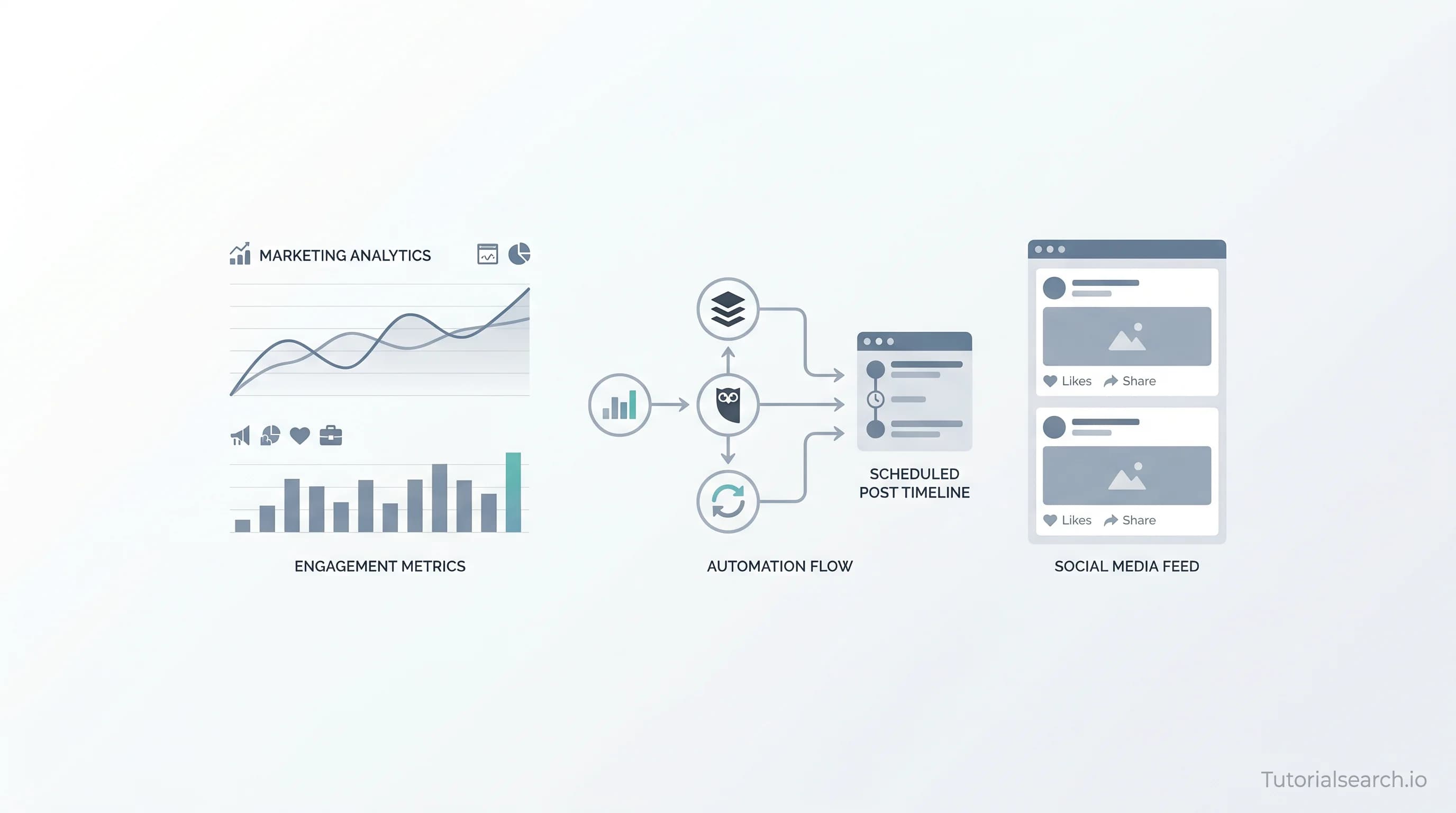
- The best social automation stack combines a scheduling tool, a DM automation layer, and an analytics connection
- Free tools can take you surprisingly far before you need to pay for anything
- Learning social automation properly takes a weekend of focused study, not months of trial and error
In This Article
- Social Automation Courses Worth Your Money
- Free Social Automation Resources That Are Surprisingly Good
- Social Automation on YouTube: Channels That Teach the Real Thing
- GitHub Repos for Social Automation Practitioners
- Books That Put Social Automation in Strategic Context
- Communities Where Social Automation Practitioners Actually Talk
- Paid vs. Free Tools: An Honest Comparison
- Related Social Automation Skills Worth Exploring
- FAQ
Social Automation Courses Worth Your Money
The course landscape for social automation is crowded with outdated material. Most courses teaching "automation" were recorded when Buffer was the only tool anyone had heard of and AI-driven scheduling didn't exist yet. Here are the ones worth your time in 2026.
IFTTT: SocialBlog Profits w Social Media Automation & IFTTT by Zack Weiner (Udemy) — [Editors' Choice] This is the course I'd recommend to anyone starting with social automation for the first time. Weiner doesn't just show you how to use IFTTT — he builds a complete operational framework around it, explaining why you'd automate each type of action and when you should leave things manual. It's also one of the few courses that takes content distribution as seriously as content creation, which is genuinely refreshing. A strong 4.88 rating across nearly 300 students tells you the material holds up over time.
Explosive Social Media Growth with ChatGPT & Olly Social by Yash Thakker (Udemy) — [Editors' Choice] The intersection of AI and social automation is where the most leverage lives in 2026, and Thakker covers it with real practicality. You'll learn to use ChatGPT for ideation and caption generation, then feed that into an automated scheduling workflow. The course has a beginner-friendly structure but doesn't condescend to people who've already dabbled. 4.67 rating, 676 students.
Social Media Automation by Ali Mirza (Udemy) — A solid foundational course that earns its place not for novelty but for completeness. Mirza covers the full cycle: strategy setup, tool selection, scheduling mechanics, and performance review. Some of the specific tool walkthroughs are dated, but the strategic framework is evergreen. Over 3,600 students. If you're building a social automation system from scratch and want a systematic approach, this is a reliable starting point.
Master Social Media Automation with Python by Neamatullah Ekhteyari (Udemy) — [Editors' Choice] For the technically inclined, this is the course. You'll build real bots for Facebook, WhatsApp, YouTube, and Telegram using Python. It requires basic Python knowledge going in, but you come out the other side able to automate things that no commercial tool supports. Strong 5-star rating across 1,000+ students. If you ever find yourself hitting the ceiling of what Hootsuite or Buffer can do, this is the escape hatch. The difference between a marketer who can write code and one who can't is increasingly the difference between owning your automation stack and renting it.
SuperQuick Social Media Organic Marketing Campaigns by Dr. Saurabh Bhatia (Skillshare) — The title sounds like hype, but the premise is genuinely interesting: complete a full month of marketing work in four hours. It's a systems-thinking approach to content automation that strips away everything non-essential. Best for freelancers and solopreneurs who need to maintain a social presence without making it a full-time job.
The ActiveCampaign & Interest Driven Sales Funnels Course by Nathan Williams (Udemy) — If your automation goals go beyond posting and into nurturing — connecting social engagement to email sequences and CRM pipelines — this is the course. Williams is one of the clearest teachers of marketing automation at the funnel level. 4,898 students and a 4.7 rating. If you want social automation that actually feeds revenue, not just vanity metrics, this is where to go next.
If you want to explore further, the Marketing & Sales category on TutorialSearch has hundreds of related courses.
Free Social Automation Resources That Are Surprisingly Good
The paid course market is crowded, but there's genuinely good free material available — you just have to know where to look.
Great Learning's Basics of Social Media Automation (free, self-paced) is a one-hour course that covers content scheduling, management tools, and engagement automation. It's nothing deep, but it's the fastest way to get a working vocabulary before you invest time in something longer. Includes a free certificate.
Great Learning's Social Media Management Course (updated for 2026) covers Buffer, Hootsuite, Sprout Social, and even includes a module on using ChatGPT for platform-specific posts. It's a good second step after the basics course if you want to understand the tool landscape before committing to any paid subscription.
Coursera / Packt: Social Media Automation using Python covers automating tasks across WhatsApp, YouTube, Facebook, and Gmail. It assumes basic Python knowledge. If you have any programming background and want to see what custom automation looks like before committing to a paid course, this is a smart preview.
Buffer's Free Plan is technically a tool, not a tutorial, but I'm including it here because it's the best sandbox for learning scheduling in practice. Three channels, ten scheduled posts each — enough to run a real content calendar for a small brand at no cost. The hands-on learning you get from actually running posts through a queue is worth more than watching most courses.
IFTTT's Free Tier is another hands-on learning environment. Build applets that connect your RSS feeds, social platforms, and content sources. The free plan has limitations but is enough to understand the logic of "if this, then that" automation before you graduate to more complex tools like Zapier or Make.
ManyChat's documentation and free templates are unusually good. The blog posts double as tutorials, and the template library shows you what real DM automation flows look like without requiring you to build them from scratch. ManyChat is the dominant tool for Instagram and Facebook DM automation, and their own learning resources are a legitimate shortcut.
Social Automation on YouTube: Channels That Teach the Real Thing
Hire the developers behind TutorialSearch.io
We built this site — full-stack web apps, AI integration & automation. Tell us what you need and we'll build yours.
Most YouTube content about social automation falls into two categories: surface-level tool demos and pure hype. These channels are neither.
Sabrina Ramonov (YouTube, 1.4M+ subscribers) — The clearest AI-to-automation educator currently working. Her content focuses on AI prompts, agent systems, and automation workflows built for solopreneurs and small business owners. The specific videos on content automation pipelines are worth watching multiple times. Her approach is unusually practical — she builds things on camera rather than just describing them.
Matt Wolfe – Future Tools (YouTube) — If you want to stay current on what's new in AI-powered social tools, Wolfe's weekly breakdowns are the most reliable signal in the noise. He covers new releases and trend shifts that directly affect how automation workflows should be built. Useful for keeping your stack up to date rather than learning from scratch.
Grace Leung (YouTube) — Brings real digital marketing consulting experience to her AI automation content. Her walkthroughs cover tools like Buffer, ChatGPT, and scheduling platforms from the perspective of someone managing actual client campaigns, not just teaching theory.
Ali Abdaal's productivity channel (YouTube, 5M+ subscribers) — Less specifically about social automation, but his videos on content system building and workflow design have shaped how a generation of creators thinks about sustainable content operations. The "content engine" concept he teaches applies directly to automating social output without burning out.
GitHub Repos for Social Automation Practitioners
Mixpost on GitHub — Open-source Buffer alternative. Self-hosted, no subscription, no limits. You craft, organize, and schedule content from your own server. The repo is actively maintained with a real community behind it. If you're building automation infrastructure for a business and don't want to depend on third-party pricing changes, Mixpost is worth a serious look. Pairs naturally with AI Marketing tools for content generation pipelines.
Social Media Automation by vasani-arpit — A desktop app for Mac, Windows, and Linux that automates cross-platform posting. The scenario system — where an action on one platform triggers a post on another — is a clever implementation of the IFTTT concept as a local, customizable tool. Good for developers who want to see how automation logic is implemented before building their own version.
GitHub Topics: social-media-automation — Rather than recommending a single repo here, this topic page is worth bookmarking. The landscape changes fast, and the topic aggregation shows you what's being actively built and starred right now. Filtering by "recently updated" gives you a real-time read on where the practitioner community is putting its energy.
Books That Put Social Automation in Strategic Context
The best books on social automation aren't really about automation — they're about the strategic thinking that makes automation worth doing.
Jab, Jab, Jab, Right Hook by Gary Vaynerchuk is a decade old and still the most useful framework for deciding what to automate. The core argument: most brands lead with asks (right hooks) when they should be providing value (jabs). Automate the value delivery first. Once you understand the ratio, you can build automation around it — rather than automating the wrong things at scale. If you don't have this framework in your head when you start building your automation stack, you'll build the wrong thing efficiently.
AI-Powered Social Media Marketing 2026 by Jason P. Anderson — A more current entry that covers the actual integration of AI tools into a social automation workflow, including content generation, scheduling optimization, and performance feedback loops. If you want a single book that addresses where automation sits in 2026 specifically, this is the one.
The Social Media Marketing Workbook 2026 by Jason McDonald — Step-by-step and highly practical. Less inspiring than Vaynerchuk's work but more actionable as a reference. The sections on scheduling and tool selection are written for people who need to build a system today, not in theory. For a course that covers similar ground with video walkthroughs, pairing it with one of the structured courses above is a useful complement.
Communities Where Social Automation Practitioners Actually Talk
r/socialmedia on Reddit — The best place for candid practitioner conversations about what's working and what isn't. The automation threads tend toward real-world troubleshooting rather than tool promotion. The signal-to-noise ratio is better than most marketing communities. Lurking here for a week will tell you more about what professionals actually use than most listicles will.
IFTTT Community — Surprisingly active for a tool community. The forums cover applet ideas, workflow troubleshooting, and integration announcements. If you're building IFTTT-based automation, this is where you'll find solutions to edge cases that documentation doesn't cover.
Buffer Community — Less of a traditional forum and more of a resource hub, but Buffer's blog and resource library function as a de facto community for people building scheduling-based workflows. The guides are written for practitioners, not beginners, which makes them worth bookmarking.
Paid vs. Free Tools: An Honest Comparison
This is the question I get most often from people starting with social automation, so here it is plainly:
| Scenario | What to Use |
|---|---|
| Getting started, testing concepts | Buffer Free, IFTTT Free, ManyChat Free |
| One brand, basic scheduling | Buffer Pro (~$18/mo), Later, Publer |
| DM automation + lead capture | ManyChat Pro (~$15/mo) |
| Agency managing multiple clients | Hootsuite, SocialPilot, or Sprout Social |
| Technical teams wanting full control | Self-hosted Mixpost or custom Python scripts |
| Connecting social to broader CRM | ActiveCampaign, GoHighLevel, Zapier |
The honest take: most people pay for tools before they've maxed out what the free tier offers. Start free, hit the ceiling, then upgrade. The decision to pay should be driven by a real limitation you've encountered — not by a sales page. Browse the social automation course catalog to find training that matches whichever tool tier you're on.
Related Social Automation Skills Worth Exploring
If social automation interests you, these related skills pair well:
- AI Marketing — The AI layer powering the next generation of social automation tools, from content generation to audience targeting
- Content Strategy — Automation without a content strategy is just noise faster; learn what to publish before automating how you publish it
- Digital Strategy — Where social automation sits within a broader digital marketing infrastructure
- Promotion Strategies — How automated distribution connects to your wider promotional playbook
- Social Media — The broader discipline that social automation serves
FAQ
How long does it take to learn Social Automation?
You can build a working social automation system in a weekend. A Friday evening to understand the tools, Saturday to set up your first workflows, Sunday to test and refine. That's not a marketing pitch — it's genuinely how accessible the tooling has become. Mastery takes longer, but functional competence is a 48-hour project if you're focused.
Do I need coding skills to learn Social Automation?
No. The majority of useful social automation runs on no-code tools like Buffer, Hootsuite, IFTTT, and ManyChat. Coding skills unlock a higher ceiling — custom Python scripts can automate things no commercial tool supports — but they're not required to build a genuinely effective automation system. The beginner social automation courses on TutorialSearch assume no technical background.
Can I get a job with Social Automation skills?
Yes, and the demand is growing. Social media managers who can build and maintain automation systems command significantly higher rates than those who only work manually. The title varies — "marketing operations," "growth marketer," "social media manager" — but the skill set is consistently valued. The practical gap between knowing social strategy and being able to automate it is where the salary premium lives.
What is Social Automation used for in marketing?
The core uses are content scheduling (posting at optimal times without being online), DM automation (responding to comments and messages at scale), cross-platform distribution (publishing once, distributing everywhere), and analytics collection (pulling performance data automatically rather than manually). The best automation stacks do all four and connect them to a CRM or email system so social engagement flows directly into nurture sequences.
What tools are best for Social Automation beginners?
Start with Buffer for scheduling and IFTTT for workflow logic. Both have free tiers that are genuinely useful. Once you understand what you're trying to automate and why, ManyChat is the natural next addition if you're on Instagram or Facebook. That three-tool stack covers most beginner needs before you need to spend anything. Browse the TutorialSearch catalog for course options across the full range of related topics.