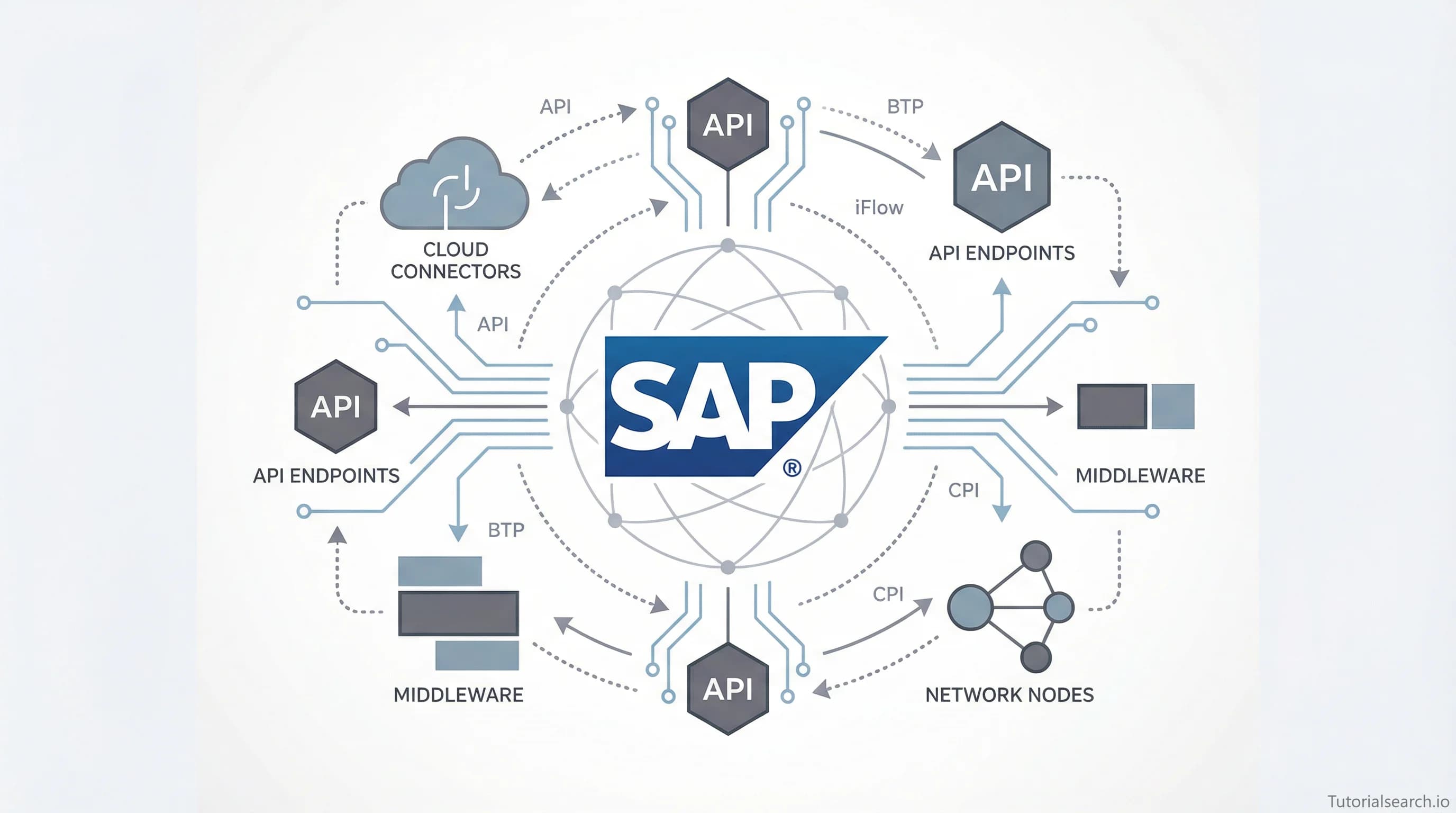
SAP Integration Skills Worth Earning: A Developer's Curated Guide
Learning SAP integration opens doors in enterprise development — this curated guide covers the best courses, free resources, GitHub repos, and books for SAP Integration Suite developers in 2026.
Need a web app built? Hire the team behind TutorialSearch.io
We ship fast, production-grade full-stack apps (Next.js, React, edge infra) — the same stack that powers this site.
SAP integration is one of the most in-demand enterprise development skills of 2026 — and one of the quietest. Every large organization running SAP needs developers who can connect its systems to everything else: cloud platforms, third-party APIs, B2B partner networks, legacy on-premise applications. You can browse SAP integration courses on TutorialSearch to see the full scope of what's available — but this guide walks you through what's actually worth your time and money.
The honest reality is that SAP integration resources vary wildly in quality. SAP's own documentation is excellent but can feel like drinking from a fire hose. Udemy courses range from surprisingly thorough to aggressively mediocre. GitHub has genuinely useful repos that only practitioners know to look for. This guide collects the best of all of it.
One thing to clarify before we dive in: the platform you'll be learning is SAP Integration Suite, which runs on SAP Business Technology Platform (BTP). Older tutorials and job postings often reference "SAP CPI" or "SAP Cloud Platform Integration" — these are earlier names for the same core technology. When an SAP integration job posting says "CPI experience required," they mean SAP Integration Suite.
Key Takeaways
- SAP integration developers use SAP Integration Suite to connect SAP systems to cloud and on-premise applications
- SAP Integration Suite runs on SAP Business Technology Platform (BTP) — a free trial account lets you practice hands-on from day one
- iFlow design, Groovy scripting, and message mapping are the core technical skills to build first
- The C_CPI certification is the primary credential SAP integration professionals pursue
- Free learning paths exist through SAP's own portals — no paid course required to get started
In This Article
- What SAP Integration Actually Is
- The SAP Integration Courses I'd Recommend First
- Free SAP Integration Resources Worth Your Time
- SAP Integration on YouTube
- GitHub Repos Worth Bookmarking for SAP Integration Projects
- Books for Going Deeper on SAP Integration
- Paid vs. Free: Picking Your SAP Integration Learning Path
- Where the SAP Integration Community Lives Online
- SAP Integration Certification: Is the C_CPI Worth It?
- Skills That Pair Naturally with SAP Integration
- FAQ
Updated for 2026 and reflecting the latest SAP Integration Suite capabilities and product roadmap.
What SAP Integration Actually Is
SAP integration is the practice of connecting SAP systems — S/4HANA, ECC, SuccessFactors, Ariba — to other applications and services, whether those are cloud platforms, REST APIs, B2B partner networks, or legacy on-premise systems. The platform built for this work is SAP Integration Suite, which combines Cloud Integration (CPI), API Management, Integration Advisor, Event Mesh, and Trading Partner Management into a unified toolkit.
The core building block is the iFlow (integration flow) — a visual diagram of how a message travels from one system to another, including transformations, routing logic, error handling, and adapter configuration. Most custom logic inside an iFlow is written in Groovy (scripting) or XSLT (data transformations), with Java as the underlying runtime.
Getting started is practical from day one: SAP offers a free BTP trial setup guide that provisions a live Integration Suite environment. The Set Up SAP Integration Suite Trial tutorial on the SAP Developers portal walks through the onboarding step by step — it's the right first move before committing to any course.
I remember the first time I saw an SAP integration project scope: 43 source systems connecting to a single S/4HANA deployment, each with different data formats and timing requirements. That's not unusual. The developers who can navigate that complexity reliably are consistently the ones companies struggle hardest to find.
The SAP Integration Courses I'd Recommend First
Most SAP integration courses tilt toward certification prep. That's not wrong — certification matters — but the best foundation comes from courses that make you build something real first, before you worry about exams.
SAP Cloud Integration CI/CPI includes APIM, Event Mesh (Udemy) — [Editors' Choice]
This is the most comprehensive practical course for SAP Integration Suite available anywhere right now. Rating: 4.4/5. It covers iFlow design, API Management (APIM), Event Mesh, Groovy scripting, transport mechanisms, and open connectors — the full picture of what real integration projects involve. The adapter coverage alone (HTTP, SOAP, REST, IDoc, SFTP) gives you a stronger foundation than most certification-prep courses do in their entirety. If you're buying one course, this is it.
SAP BTP Integration Suite (CPI): From Zero to S/4HANA Integration (Udemy) — [Editors' Choice]
The highest-rated practical SAP integration course at 4.7/5. It's built entirely around real S/4HANA to BTP integration scenarios: CDS Views, OData endpoints, real-time data flows, and SAP HANA connectivity. The scenario-first approach makes skills transfer to actual project work faster than tutorial-style content. Strong pick if your company runs S/4HANA.
Certified SAP Integration Suite (Udemy)
From Abdellatif Abid. Rating: 4.0/5. This intermediate course approaches SAP Integration Suite more architecturally — useful if you want to understand the design rationale behind iFlows before the implementation details. Less hands-on than the first two, but cleaner in its conceptual coverage. Good for developers who already know another middleware platform and want to understand where SAP fits.
Free SAP Integration Resources Worth Your Time
SAP invests more in free developer content than almost any enterprise software company, which means the free path is genuinely viable.
The SAP Developers portal for Integration Suite is the single best free starting point. SAP maintains this directly — it collects tutorials, hands-on missions, and code samples in one organized location and updates it when the product changes.
The Developing with SAP Integration Suite learning journey on SAP Learning is the official free self-paced curriculum. It goes from beginner concepts through building real integration flows, and it replaced the old openSAP course format as the primary learning path. If you're building from scratch, start here.
Modernize Integration with SAP Integration Suite (formerly on openSAP, now hosted on SAP Learning) is a free MOOC-style course covering the full Integration Suite capability set — A2A, B2B, B2G scenarios. Budget 4-6 hours.
openSAP Microlearning offers 5-10 minute videos on specific topics. Well-suited for filling gaps on particular adapters or features without sitting through a full course.
Getting Started with SAP CPI: A Beginner's Handbook is a multi-part series on the SAP Community blog written by a working practitioner. More honest and scenario-specific than most documentation. Highly recommended alongside any formal course.
If you want a structured paid introduction to SAP BTP before tackling integration specifically, SAP BTP for Beginners (4.5/5, Udemy) gives you the platform foundation without overwhelming you with integration-specific complexity up front.
SAP Integration on YouTube
The official SAP Developers YouTube channel is the most useful free video resource for SAP integration. Their "Hands-on SAP Dev" series covers Integration Suite with real code and working demos — episodes run 30-60 minutes and are built by developer advocates who actually know the product. Not polished, but accurate and technically thorough in a way that studio-produced content rarely is.
The SAP Integration Suite Hands-On Video Tutorials playlist, curated via the SAP Community blog, is a 12-part series that runs under 90 minutes total. It takes you from environment setup through building a complete integration scenario — one of the most time-efficient introductions to the platform available.
The SAP Integration Suite technical information page links to scenario-specific demo videos organized by integration type (A2A, B2B, API Management). Useful once you know what you're building and want to see the specific pattern demonstrated.
For rated and reviewed video course options, search for SAP integration video courses on TutorialSearch — you'll find courses with real student counts, ratings, and instructor details to help you compare options quickly.
GitHub Repos Worth Bookmarking for SAP Integration Projects
Need a web app built? Hire the team behind TutorialSearch.io
We ship fast, production-grade full-stack apps (Next.js, React, edge infra) — the same stack that powers this site.
SAP/apibusinesshub-integration-recipes (156 stars) is the most practically useful repository for working SAP integration developers. It's a community-curated library of reusable Groovy scripts, XSLT transformations, iFlow packages, CI/CD templates, and integration best practices. Think of it less as a tutorial and more as a professional reference — something you return to repeatedly while building real projects, not something you work through once at the start.
SAP-samples/integration-suite-learning-journey (24 stars) contains the exercise templates for SAP's official learning journey on SAP Learning. If you're working through the official curriculum, this repo provides pre-built starting points for each exercise so you can focus on the learning rather than setup. Well-suited for structured beginners with a BTP trial account.
SAP-samples/teched2025-AD169 (10 stars) is a TechEd hands-on lab from 2025 that shows how to build custom AI agents that integrate with SAP systems using Joule Studio on BTP. Not for absolute beginners — but it shows where SAP integration development is heading: AI-powered agents that talk to S/4HANA, make recommendations, and take actions across enterprise systems.
Books for Going Deeper on SAP Integration
SAP Cloud Integration Cookbook (available at SAP PRESS) is the best dedicated book for advanced integration work with SAP Integration Suite. It covers complex iFlow patterns, error handling architectures, SAP ERP HCM and S/4HANA integration scenarios, and best practices that only emerge in long-running real-world projects. The cookbook format means you can go directly to the relevant recipe rather than reading linearly.
ABAP RESTful Application Programming Model (Baumbusch, Jäger, and Lensch — also at SAP PRESS) is worth reading if your integration projects consume ABAP-side OData services built in S/4HANA. It covers the modern ABAP RAP model for building the server-side APIs that integration flows call. Not an integration book strictly, but it closes a gap that most integration courses leave open.
A contrarian take: most working SAP integration developers have never read a technical book on this topic, and many are excellent at their jobs. SAP's official documentation combined with the community blog ecosystem covers most real-world scenarios well enough. Books earn their place on edge cases, architectural decisions, and when you're taking on project leadership rather than individual implementation.
Paid vs. Free: Picking Your SAP Integration Learning Path
| Free Path | Paid Path | |
|---|---|---|
| Best starting point | SAP Developers portal + Learning Journey | SAP Cloud Integration CI/CPI Udemy course |
| Hands-on environment | BTP free trial account | BTP free trial account (same) |
| Time to working basics | 15–20 hours | 8–12 hours |
| Best for | Self-directed learners comfortable with documentation | Visual learners who prefer structured video walkthroughs |
| Cost | $0 | $15–30 (Udemy sale price) |
| Certification prep | Needs supplementing | Often includes practice questions |
| Community support | SAP Community forums (very active) | Udemy Q&A (varies by instructor) |
Both paths lead to the same destination. The paid path compresses the timeline. The free path is more flexible and keeps costs zero. Either way, get your free SAP Integration Suite trial account set up before starting — having a live environment to experiment in changes how quickly concepts actually stick.
Where the SAP Integration Community Lives Online
The SAP Community Integration Discussions forum is the most active place for SAP integration Q&A. SAP employees, certified partners, and independent practitioners all participate. The quality of answers is consistently higher than most vendor support forums — specific error messages, adapter quirks, and iFlow design questions get real responses from people who've solved the same problems.
The SAP Community site more broadly hosts practitioner blog posts, how-to guides, and scenario threads accumulated over years. Searching for adapter names, error codes, or specific iFlow patterns here often surfaces working solutions faster than the official documentation would.
SAP also maintains a Discord community (discord.me/sap-guide) that covers exam preparation discussion and general SAP technology topics, including Integration Suite certification prep.
SAP Integration Certification: Is the C_CPI Worth It?
The C_CPI (SAP Certified Associate - Integration Developer) is the primary certification for SAP integration work. Two active exam versions currently exist: C_CPI_2404 and C_CPI_2506. Both test knowledge of adapter configuration, security setup, error handling, message mapping, and transport management in Integration Suite.
The honest answer: yes, it's worth pursuing — but only after you've built something real first. The certification validates knowledge that only sticks through hands-on practice. Jumping straight to exam prep without project experience means you'll pass the test and still struggle in interviews when they ask about actual implementation decisions.
SAP C_CPI_2404 Certification Practice Tests (4.8/5, Udemy) is the highest-rated practice exam option available. [Editors' Choice] — the question quality is unusually close to the actual exam, and the explanations are detailed enough to fill real knowledge gaps rather than just drilling answers. Worth using in the final two weeks before the exam.
Skills That Pair Naturally with SAP Integration
SAP integration work sits at a crossroads of several other technical domains. These skills complement it directly:
- Java Objects courses — SAP Integration Suite's runtime is built on Java, and Java object model knowledge helps when debugging Groovy scripts, understanding memory behavior in large message processing, or writing custom adapters
- Automation Development courses — Process automation and integration overlap significantly on SAP BTP; the two skill sets appear together in most enterprise SAP job descriptions and are often handled by the same team
- JavaScript Development courses — SAP API Management uses JavaScript for API policies, and Node.js tooling is increasingly common in CI/CD pipelines around SAP integration deployments
- Python Applications courses — Python's
pyrfclibrary enables scripting and API interactions with SAP from outside the platform, and it's widely used in data transformation pipelines that sit adjacent to integration flows
FAQ
How long does it take to learn SAP integration?
Most people reach a point where they can design basic iFlows, configure standard adapters, and deploy a working integration within 4-6 weeks of daily practice. Getting to a professional level — handling complex error scenarios, security configurations, B2B partner management, and CI/CD deployment pipelines — takes 6-12 months of real project exposure. The learning curve is steeper than most cloud platforms because the domain complexity of enterprise ERP systems adds on top of the technical complexity.
Do I need ABAP to learn SAP integration?
No — and this is the most persistent misconception about the field. SAP Integration Suite uses Groovy for scripting within integration flows and XSLT for data transformations. ABAP isn't required at the integration layer. It becomes relevant only if you're also building the S/4HANA-side OData services that your integration flows consume — but that's a separate skill. You can start learning SAP integration with zero SAP background and no ABAP exposure.
Can I get a job with SAP integration skills?
Yes, and the demand is real. SAP integration is one of the harder roles for enterprises to fill because the pool of qualified developers is small relative to the number of SAP environments that need integration work done. The C_CPI certification helps significantly — many postings list it explicitly. C_CPI_2506: SAP Integration Developer Certification on Udemy covers both practical skills and exam preparation in a single course for those targeting the newer exam version.
What programming languages are used in SAP integration?
Groovy is the primary scripting language for custom logic inside iFlows. XSLT handles data transformation. Java underpins the Integration Suite runtime, and understanding it helps when debugging complex execution issues. ABAP is used on the SAP application side for building APIs that integration flows consume. For tooling and external integration scripts, both Java and Python are commonly used in real SAP projects.
How does SAP integration relate to API development?
SAP Integration Suite includes API Management as one of its core capabilities — you can expose SAP system data as RESTful APIs, manage access and rate limiting, and connect those APIs to other cloud services. The relationship is close: in modern SAP architectures, you often build the integration flow and expose the result as a managed API. Knowing both sides of that connection is increasingly what enterprises expect from mid-to-senior SAP integration developers.
Is Python used in SAP integration projects?
Yes, though not inside integration flows themselves (those run Groovy). Python is commonly used in scripts that interact with SAP APIs via the pyrfc library, in data transformation pipelines that sit adjacent to integration deployments, and in CI/CD automation around integration development. It's particularly common in analytics-adjacent projects where SAP data needs to reach Python-based ML or BI tools.