Where Should You Actually Learn Mixed Media Art in 2026?
A creative journey through the best mixed media art courses, free tutorials, YouTube channels, books, and communities — organized as a learning path from first experiments to finding your artistic voice.
Hire the developers behind TutorialSearch.io
We built this site — full-stack web apps, AI integration & automation. Tell us what you need and we'll build yours.
In a quiet corner of her apartment, Maya stared at a blank page in her sketchbook. She'd been watching watercolor paintings online for months—beautiful, flowing washes of color that seemed to capture light itself. But something felt incomplete about the images she admired most. They had depth, texture, dimension. It wasn't just paint. As she dug deeper, she discovered the term: mixed media art. And suddenly, a whole universe of creative possibility opened before her.
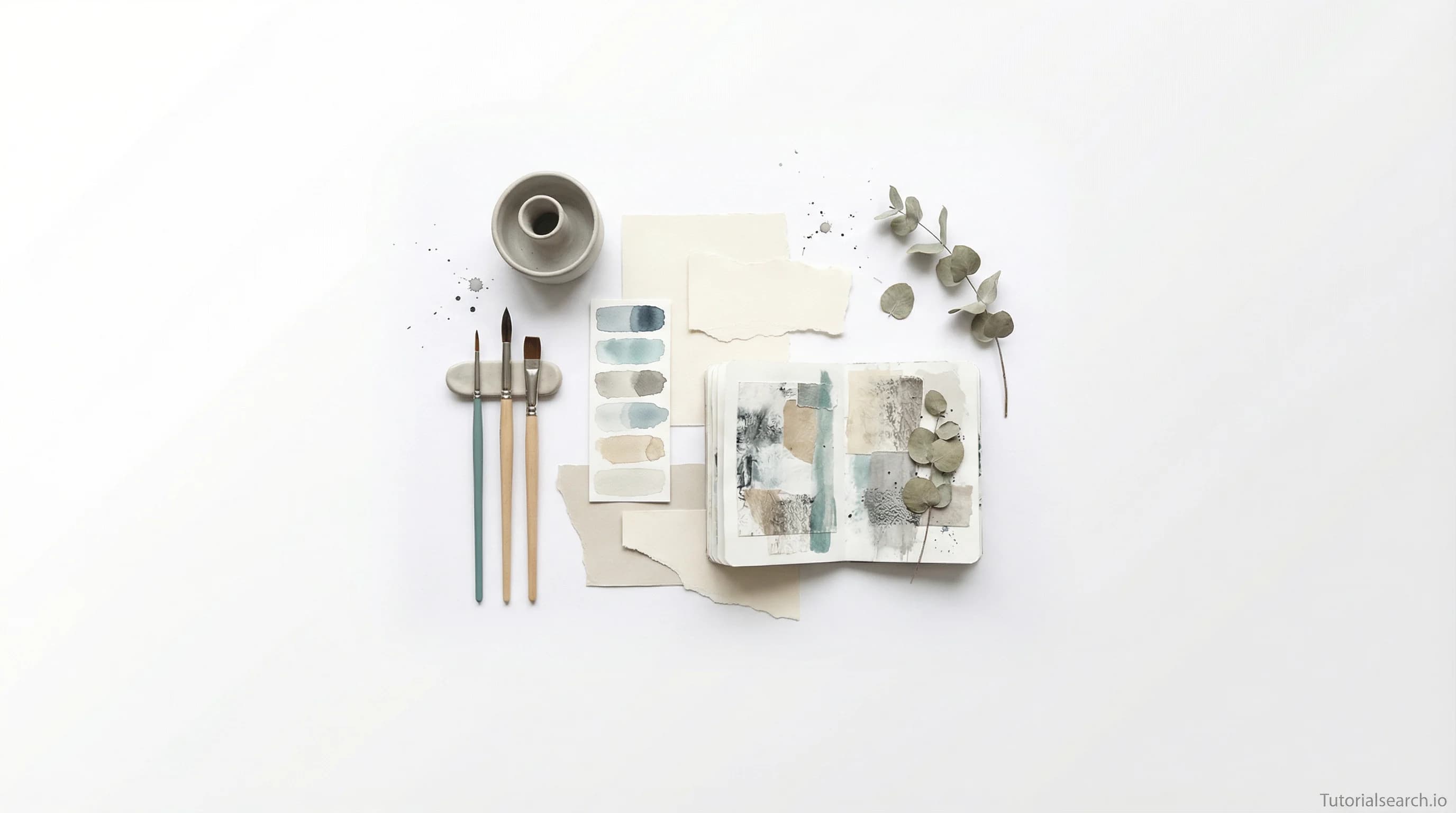
Mixed media art is the deliberate combination of different artistic materials and techniques within a single work. It's paint layered over collage, ink bleeding into watercolor, photographs incorporated with acrylic, charcoal marks emerging from beneath torn paper. It's the antidote to the limiting idea that you must choose one medium and master it exclusively. Instead, mixed media invites you to break the rules, to experiment freely, to let materials speak in conversation with one another.
If you're drawn to visual expression but feel constrained by traditional approaches, or if you've been creating in one medium and hunger for more dimensionality, mixed media art offers a liberating path forward. This guide walks you through that journey—from your first materials to finding community among artists who embrace creative abundance.
Part One: Beginning—Your Introduction to Mixed Media Expression
What Mixed Media Art Actually Is (Beyond the Buzzword)
Mixed media art isn't a new concept, though it's gained tremendous visibility in recent years. Artists have combined materials since the Renaissance—think collage elements in Renaissance paintings or the assemblages of early-20th-century modernists. What's changed is accessibility. Today, anyone with curiosity and basic supplies can explore this approach.
The defining characteristic isn't complexity. A simple combination of watercolor and pen on paper is mixed media. So is a canvas with acrylic, fabric scraps, and hand-drawn elements. What matters is intentionality—you're consciously choosing different materials because each brings something unique to your work.
When you explore mixed media art courses, you'll discover three broad approaches:
Collage-based mixed media combines papers, photographs, and found materials as structural elements. Paint-layered mixed media builds depth through overlapping different paints, inks, and drawing media. Assembly mixed media incorporates three-dimensional objects—buttons, wire, fabric, wood—into a flat or sculptural piece.
Most artists working in mixed media move fluidly between these approaches rather than rigidly adhering to one.
The Essential Starter Materials
You don't need to invest hundreds of dollars to begin. In fact, constraint often sparks creativity more effectively than overwhelming choice.
For your first exploration, gather:
- Watercolor or gouache paints (student-grade works fine)
- Acrylic paints (versatile, forgiving, quick-drying)
- Pencils and black ink pens (for drawing and line work)
- Glue stick and white craft glue (for adhering papers)
- Scissors
- Mixed paper types: watercolor paper, mixed media paper, scrap papers, magazine pages, newspaper
- Brushes (natural and synthetic, various sizes)
- Optional but valuable: spray bottle, masking tape, gesso, collage medium
The beauty of mixed media is that paper scraps, old magazines, fabric remnants, and items you'd normally discard become resources rather than waste. Many experienced mixed media artists collect materials obsessively, maintaining "scrap stashes" organized by color, pattern, or texture.
One contrarian truth worth stating now: don't wait for premium materials. The barrier to starting mixed media isn't equipment quality—it's willingness to make mistakes on materials that feel "precious." Student-grade supplies lower this psychological barrier considerably.
Your First Project: The Experimental Page
Rather than launching into a masterpiece, begin with exploration. Create three or four 6x6 inch squares on watercolor paper.
On the first square, paint a watercolor wash. While it's still damp, drop ink into it and watch how the colors interact. This teaches you about material behavior—something no instruction video can fully convey.
On the second, glue down torn magazine pages to create an abstract composition, then paint over them with acrylics. Leave some paper visible.
On the third, create pencil drawings, then add paint around them, letting line work remain prominent.
On the fourth, try collaging torn printed text with watercolor. Notice how words can become visual elements when their meaning recedes and their form takes precedence.
These aren't meant to be "good." They're meant to build intuition about how materials combine.
Part Two: Building Your Foundation—Free Resources and Structured Learning
Surprisingly Good Free Stuff
Not every artist needs a paid course to develop competence. The internet hosts extraordinary free instruction for mixed media.
The Virtual Instructor offers comprehensive mixed media tutorials covering everything from basic techniques to advanced composition. Jerry's Artarama maintains free instruction videos on mixed media specifically, organized by technique and skill level. For journal-focused work, Mimi Bondi's tutorial collection teaches process-based approaches that transfer across projects.
Gwen Lafleur and ArtVilla both offer curated mixed media lessons that progress logically. MixedMediaArt.net functions as a repository of techniques and gallery, useful for inspiration and reference.
Format Magazine's beginner guide contextualizes mixed media historically and creatively, while Visual Arts Passage's 2026 guide offers a current overview of techniques and examples.
These free resources share a strength: they're typically created by practicing artists, not professional instructors, which means they capture genuine creative thinking rather than sanitized methodology.
Hit Play and Start Learning
On YouTube, Tiffany Solorio (100K subscribers) creates beginner-accessible mixed media content focused on art journals and cardmaking—her energy is infectious and her projects are achievable. Maremi SmallArt and Mimi Bondi both publish regular project videos that walk you through their thinking in real time. Mixed Media Girl offers beginner-friendly content that explores multiple artistic mediums without intimidation. Laura Horn Art specializes in mixed media process videos—watching someone work through a piece, making decisions and corrections, teaches differently than a polished tutorial.
[Editors' Choice] Among YouTube creators, Tiffany Solorio stands out for consistently bridging technique instruction with genuine enthusiasm. Her channel doesn't just show you how—it reminds you why mixed media art is worth your time.
Courses Worth Your Creative Investment
Free instruction gets you started, but structured courses provide something different: progression, accountability, and exposure to professional thinking.
Painting Nature with Watercolor & Gouache: Create Mixed Media Art by Rosalie Haizlett (Skillshare, 4.81★, 2,662 students) — [Editors' Choice] This course combines technique instruction with thematic project-based learning. Haizlett positions mixed media as a natural extension of watercolor practice rather than an entirely separate discipline. The high enrollment and rating reflect its effectiveness—this is where many artists discover that combining mediums isn't just permissible, it's transformative.
Watercolor, Gouache & Acrylic: Layering and Blending in Different Mediums (Skillshare, 4.78★, 5,072 students) — This course prioritizes the science of how different materials actually behave when layered—knowledge that prevents frustration when paint lifts unexpectedly or adhesion fails. If you want to understand medium compatibility at a deeper level, start here.
Beyond Paper: Spice Up Your Collage with Simple Mixed Media Techniques (Skillshare, 4.8★, 112 students) — Shows how paint, drawing, and other elements strengthen purely paper-based work. The smaller class size often translates to a more focused, practical learning experience.
For those drawn to illustration techniques specifically, these courses build foundational skills that you'll layer mixed media approaches on top of.
Part Three: Going Deeper—Specialized Practices That Stretch Your Skills
Hire the developers behind TutorialSearch.io
We built this site — full-stack web apps, AI integration & automation. Tell us what you need and we'll build yours.
Art Journaling as a Mixed Media Laboratory
If you want a structured container for daily mixed media experimentation, art journaling offers it. Unlike a sketchbook (where you refine specific skills) or a gallery piece (where you're aiming for external quality), an art journal is your private laboratory.
Layered Legacies: Mixed Media Art Journals Bookmaking by Denise Love (Skillshare, 5.0★, 453 students) — [Editors' Choice] This course treats bookmaking and journaling as integrated practices. You're not just filling pages—you're creating the container itself, which changes your relationship to the work entirely.
MIXED MEDIA ART JOURNAL GIRL by Michelle Perkett (Skillshare, 5.0★) — Focuses on the emotional and creative dimensions of journal-making. Perkett's approach emphasizes personal expression over technical perfection.
Create Authentic Mixed Media Art Journal Pages in Procreate by Delores Orridge Naskrent (Udemy, 4.79★) — Digital mixed media on iPad. If you create on a tablet, this opens possibilities that differ interestingly from traditional media. Check out more Procreate illustration courses for related learning.
The Collage Path: Paper, Scissors, and Surprising Depth
Collage remains perhaps the most accessible entry point for mixed media. You need scissors, glue, and paper. The learning curve is gentle, but the depth possible is extraordinary.
Intro Class on Mixed Media Magazine Paper Collage (Udemy, 4.94★, 220 students) — Structures collage fundamentals clearly for newcomers. The course's exceptionally high rating relative to its student count suggests outstanding teaching quality.
Layers of Inspiration: Craft Your Own Mixed Media Collage Sketchbook (Skillshare, 5.0★, 230 students) — Integrates collage into sketchbook practice, which is valuable if you want daily mixed media work without the time commitment of full-page journal spreads.
A practical approach: collect ephemera deliberately. Magazine pages, newspaper clippings, old book pages, fabric scraps, ticket stubs, printed text—any paper product becomes material. Organize by color or pattern. As your collection grows, you'll notice patterns in what attracts you visually, which reveals your aesthetic preferences.
Beyond the Flat Page: Three-Dimensional Mixed Media
A Doll Story - Mixed Media Art Doll Making with Danita by Danita Art (Udemy, 4.81★, 274 students) — [Editors' Choice] This course extends mixed media into three dimensions. Doll-making combines mixed media techniques with sculpture—you're thinking about mixed media differently when your finished piece occupies physical space. Danita Art's warmth as an instructor makes the unfamiliar feel approachable.
Craft Captivating Mixed Media Artist Trading Cards by Tammy Prara (Skillshare, 5.0★, 180 students) — Artist Trading Cards (2.5x3.5 inches) force constraint that paradoxically sparks creativity. These tiny mixed media works are shareable, collectible, and completely addictive to make.
Artist Inspired: Graphic Mixed Media Artwork Techniques Inspired by Jasper Johns by Elisabeth Wellfare (Skillshare) — Learning through artist study helps you understand technique as an extension of artistic vision rather than isolated skill.
Quick-Fire: Picking Your Path
| If you're drawn to... | Start with... | Then explore... |
|---|---|---|
| Color and paint | Rosalie Haizlett's watercolor & gouache course | Watercolor techniques |
| Paper and collage | Intro Class on Mixed Media Magazine Paper Collage | Beyond Paper course, then art journaling |
| Digital creation | Procreate Art Journal Pages | Procreate illustration courses |
| 3D and sculptural | A Doll Story with Danita Art | Artist Trading Cards, assemblage techniques |
| Self-expression | Layered Legacies art journal bookmaking | Creative expression resources |
Part Four: Learning from Other Artists and Developing Your Eye
Following Established Mixed Media Artists
Your learning accelerates when you study artists whose work moves you. This isn't about imitation—it's about understanding visual thinking.
Sarah Renae Clark maintains a curated list of mixed media artists worth following. The collection spans style, geography, and approach, ensuring you'll find artists whose sensibilities resonate with yours.
Study how different artists solve similar problems. When five mixed media artists paint the same subject—say, a bird—notice their material choices. Did they use collage as the foundation or the accent? How much painting remains visible? Where did they add restraint versus abundance?
This observational practice trains your eye more effectively than tutorials because you're learning aesthetic decision-making, not just technique.
The Most Overrated Advice in Mixed Media
Everyone says "just experiment!" as though that's sufficient guidance. Experimentation without reflection produces randomness, not growth. The missing piece is this: after every experiment, spend two minutes asking yourself what you noticed. What surprised you? What would you repeat? What would you change?
This micro-reflection habit transforms undirected play into deliberate practice. A hundred experiments with reflection outperform a thousand without it.
Part Five: Books, Repos, and Your Support Network
Read Your Way In
These books complement hands-on practice with deeper understanding:
- "101 Mixed Media Techniques" by Cherril Doty, Suzette Rosenthal, and Isaac Anderson — A reference library of approaches, not meant to be read sequentially but to inspire specific technical exploration when you're stuck
- "Creative Abstract Mixed Media" — Serves as a beginner's guide emphasizing watercolor integration with other mediums
- "Create Your Life Book" by Tamara Laporte — Explicitly bridges mixed media art with broader creative living practices
- "Art Lab for Kids" by Susan Schwake — 52 creative adventures, many translatable to adult practice despite the title
Open Source Inspiration
For those interested in where traditional and digital art intersect:
- awesome-creative-coding — A curated collection of creative coding resources, tools, and inspiration. Artists increasingly use generative prints as collage elements or incorporate algorithmic patterns into physical mixed media work.
- awesome-generative-art — Resources for algorithmic art creation, which intersects with mixed media when prints meet paint.
- awesome-arts — Broader art resources spanning disciplines and approaches.
Join the Conversation
Reddit communities like r/MixedMedia and r/ArtJournaling function as judgment-free zones where artists share work-in-progress, ask material questions, and celebrate each other's experiments.
Art Prof Discord offers structured community for visual artists across disciplines, with mixed media channels specifically hosting artists at all levels.
Various art-focused Discord servers on Disboard offer communities organized by medium, style, or geography. Many include critique channels for thoughtful feedback.
Browse the broader Art & Illustration category on TutorialSearch.io for related learning across disciplines, or explore beginner art courses if you're building foundational skills alongside your mixed media practice.
Mixed Media Art FAQ
What materials are commonly used in Mixed Media Art?
The list is genuinely open-ended, but fundamentals include watercolor, acrylic, gouache, ink, charcoal, pencils, collage papers, fabric, and gesso. More adventurous practitioners incorporate wood, found objects, thread, resin, and photographic elements. The principle matters more than the specific material—you're choosing items that create interesting interaction.
How does Mixed Media Art differ from other art forms?
Painting, drawing, and collage each have distinct visual languages and material constraints. Mixed media explicitly embraces multiple materials simultaneously, which creates compositional possibilities unavailable in any single medium. The result is often greater visual complexity and stronger textural interest than single-medium work.
What skills are necessary for creating Mixed Media Art?
You don't need advanced technical skill to start. You need curiosity, willingness to experiment, and comfort with imperfection. Specific technical skills—understanding color theory, compositional principles, material properties—develop through practice rather than serving as prerequisites.
Is Mixed Media Art a good career path for artists?
Mixed media translates across income sources—teaching, selling physical work, creating commissioned pieces, and licensing designs all represent viable paths. The relative accessibility of mixed media means you can build reputation and audience more readily than in highly specialized practices. That said, any art career requires business skill and persistence alongside artistic development.
What is the history of Mixed Media Art as an art form?
Mixed media as deliberate artistic practice developed through the 20th century—Kurt Schwitters and the Dadaists pioneered collage-based approaches, Pop Artists incorporated found materials, and contemporary artists have exploded the possibilities. What distinguishes modern mixed media is its mainstream acceptance and accessibility rather than radical novelty.
Your Next Move
Mixed media art isn't a destination you arrive at after sufficient study. It's a practice you inhabit, evolving as your skills deepen, your aesthetic clarifies, and your material vocabulary expands.
Begin where Maya began—with curiosity and a blank page. Gather basic materials and start combining them. Take a course when you're ready to understand why things work. Find community when the solitude of early practice needs company. Document your discoveries.
The mixed media artists you admire didn't master the form before creating publicly—they created their way into mastery. Your first mixed media creation is waiting. Not tomorrow, not when you're ready. Today, with whatever materials are at hand.