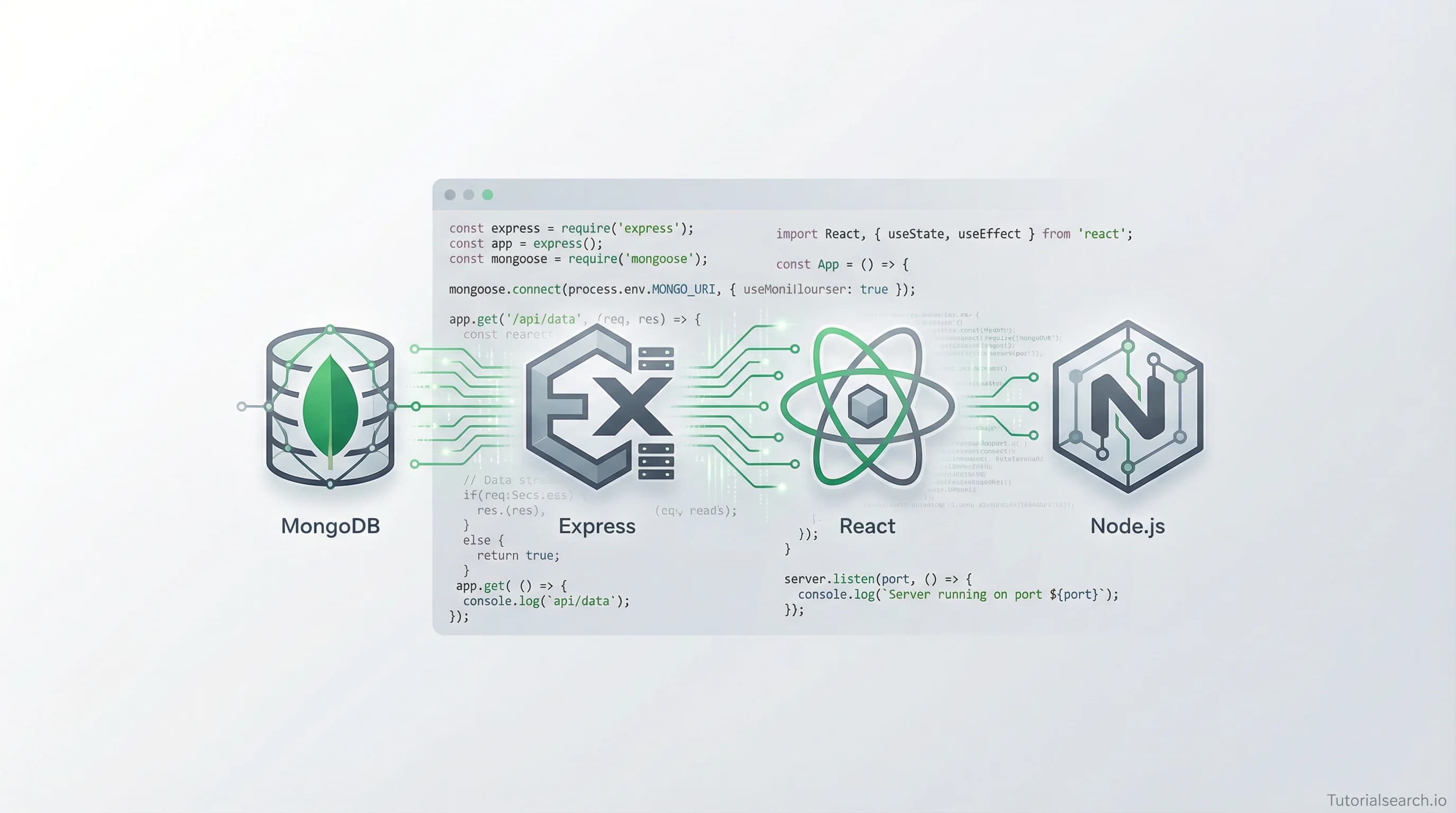
MERN Stack Without the Fluff: Courses That Actually Deliver
MERN Stack development is one of the fastest paths from JavaScript knowledge to shipping full-stack apps. This guide cuts through 90+ courses and covers the courses, free resources, YouTube channels, GitHub repos, and communities that actually deliver results in 2026.
Need a web app built? Hire the team behind TutorialSearch.io
We ship fast, production-grade full-stack apps (Next.js, React, edge infra) — the same stack that powers this site.
MERN Stack development is one of the clearest paths from "I know JavaScript" to "I can ship production web apps" — and in 2026, the course library has matured enough to cut through the noise. MongoDB, Express.js, React, and Node.js form a complete toolkit for building data-driven apps without switching languages between frontend and backend. If you've been putting off learning the stack because it felt overwhelming, browse the MERN Stack course catalog to see the full picture. There are 90+ courses now — which is exactly why this guide exists.
The standard advice says to spend months studying each technology separately before touching a "real" MERN project. That advice is wrong for most people. The first time I connected a React component to an Express route and watched actual data flow from MongoDB through the server and into the browser, the whole stack clicked in a way that weeks of isolated tutorials hadn't managed. The connection is the lesson. Learn it in context, through projects that mirror actual work.
This guide covers the courses, free resources, YouTube channels, GitHub repos, books, and communities worth your time. The mediocre options aren't here.
Key Takeaways
- MERN Stack unifies full-stack JavaScript development with a single language from database to UI
- MERN Stack courses are most effective when project-based — isolated component study rarely produces full-stack fluency
- The highest-rated MERN Stack courses consistently average 4.5+ stars with tens of thousands of enrolled students
- Free MERN Stack resources from MongoDB, freeCodeCamp, and YouTube are genuinely viable at any skill level
- MERN Stack developer skills map directly to in-demand full-stack developer roles in 2026
In This Article
- MERN Stack Courses Worth Your Time
- Free MERN Stack Resources That Earn Their Place
- MERN Stack YouTube Channels That Don't Waste Your Time
- MERN Stack GitHub Repos Worth Starring
- Books That Go Deeper on the MERN Stack
- MERN vs MEAN vs MEVN: Which Stack Is Actually Right for You?
- MERN Stack Communities Worth Joining
- Related MERN Stack Skills Worth Exploring
- FAQ
MERN Stack Courses Worth Your Time
These are the courses I'd recommend to a colleague starting the MERN Stack from scratch — or trying to level up from scattered YouTube tutorials to structured, project-based learning.
1. MERN Stack Master Course — Building Your Own Instagram
[Editors' Choice]
MERN Stack Master Course - Building your own Instagram (Udemy) by Mukesh Phulwani has 102,000+ students and a 4.57-star rating — the kind of numbers that only come from consistently delivering. The project is an Instagram clone, which sounds gimmicky until you realize what that actually requires: user authentication, image uploads, feeds, follower relationships, and a complete front-to-back data pipeline.
What separates this course is that Phulwani explains why you're wiring things together the way you are. You finish knowing more than just the keystrokes — you understand the architecture decisions. MongoDB for flexible document storage, Express for clean server routing, React with hooks for the UI, Node.js for the runtime layer. It all connects.
If I could only pick one MERN Stack course on this list for the typical learner, this would be it.
2. MERN Stack Front To Back: Full Stack React, Redux & Node.js
[Editors' Choice]
MERN Stack Front To Back: Full Stack React, Redux & Node.js (Udemy) by Brad Traversy is the course that helped establish MERN Stack as a serious beginner destination. 64,000+ students, 4.56 stars, and a reputation that's held up for years.
The project is a developer connector platform — a social app for developers to create profiles, post experience, add education, and connect with each other. It's not glamorous, but it's exactly what you'd build in a real job interview take-home assignment. Traversy adds Redux for state management, which is the right call. Production MERN apps need state management, and learning Redux alongside React rather than retrofitting it later saves real time.
The course treats you like a developer who can handle complexity. The pacing is brisk but explained. Good for learners who already have JavaScript experience and want something that doesn't slow down for every concept.
3. MERN Stack Projects-Based Course: Completely Redone
[Editors' Choice]
MERN stack projects Based Course Completely Redone (Udemy) by Masynctech Coding School carries the highest rating on this list at 4.71 stars. The structure is different from most MERN Stack courses: instead of one large end-to-end project, you build multiple smaller apps that each target a specific aspect of the stack.
This works better for retention. You get the "it works end-to-end" feeling multiple times throughout the course rather than only at the very end. The code is clean, the explanations are systematic, and the breadth of projects means you'll have more portfolio material when you finish. Masynctech's catalog also includes follow-on MERN courses if you want to keep building after completing this one.
Best fit for intermediate learners who've touched MERN or any of its components before and want to build fluency through volume and repetition.
4. MERN Stack: All You Need to Know with Practical Project
MERN Stack: All You Need to Know with Practical Project (Udemy) by Jahid Hiron has 33,000+ students and a 4.54-star rating. This is the most beginner-friendly course on this list — it has the clearest ramp-up curve and covers the essentials without bloat.
If you haven't touched MongoDB, Express, or Node.js before and want to understand the MERN Stack holistically before diving into something more advanced, Hiron's course is the right starting point. The project is contained enough to finish without losing momentum, and the fundamentals coverage is solid throughout.
Browse Full Stack Development courses alongside your MERN work — many courses there cover architecture patterns and deployment strategies that MERN-specific content sometimes skips over.
Free MERN Stack Resources That Earn Their Place
Paid courses have structure. Free resources have flexibility. These are the ones that actually deserve a bookmark.
MongoDB MERN Stack Tutorial (MongoDB Official) is the authoritative starting reference. MongoDB's own team maintains it, which means it stays current with their tooling. It walks through building a complete MERN application connected to a free MongoDB Atlas account — no credit card required, no setup friction. The coverage is practical rather than encyclopedic, which makes it more useful than most vendor documentation ends up being.
freeCodeCamp MERN Stack Roadmap by Chris Blakely is a structured seven-step path from HTML/CSS/JavaScript fundamentals through full-stack MERN deployment. What makes this more useful than a typical blog post is that it names specific resources at each stage rather than vague categories. The companion 15-hour hotel booking project is genuinely comprehensive and takes the roadmap from abstract to actionable.
React Official Documentation is better than it's ever been. The React team rebuilt the docs from scratch with interactive examples, clearer explanations of hooks, and real guidance on when to use which patterns. When a MERN Stack course glosses over a React concept, this is the right place to go deep — not a YouTube comment section.
MongoDB Atlas is the free-tier cloud database for MERN projects. The free tier is generous enough for multiple real applications with no expiration date. If you're setting up local MongoDB for MERN development instead of Atlas, you're adding complexity that doesn't pay off at the learning stage.
Simplilearn Free MERN Stack Program is a certificate-bearing MERN course at no cost. It's not as deep as the Udemy options above, but the certificate has genuine signaling value for job searchers who don't have a computer science degree. Pair it with hands-on project work to give the credential some practical depth.
MERN Stack YouTube Channels That Don't Waste Your Time
YouTube's MERN Stack coverage is enormous and mostly mediocre. These four channels are the exceptions worth bookmarking.
Dave Gray Teaches Code runs the most structured free MERN Stack series on YouTube — 13 chapters, 8 hours, covering backend middleware, MongoDB integration, React, Redux with RTK Query, JWT authentication, role-based access control, and deployment to Render.com. The companion GitHub repository (601 stars) is well-organized and actively maintained. If you watch one MERN series on YouTube, make it this one.
JavaScript Mastery — Adrian Hajdin builds projects that look like real products. His MERN tutorials have covered a social media memories app, a full dashboard with authentication and data visualization, and a Threads clone using Next.js with MongoDB. The production quality is high, the code is clean, and the tutorials are long enough to actually teach architectural thinking rather than just implementation steps.
Traversy Media — Brad Traversy's free YouTube content complements his Udemy course and stands well on its own. The MERN crash courses and one-off project tutorials here are a good way to preview his teaching style before committing to the full paid course. His habit of explaining why a pattern exists — not just how to type it — is the defining quality that makes his content stick.
Lama Dev — Builds complete MERN apps in single long-form tutorials: a YouTube clone, a Netflix clone, an e-commerce app, a full blog platform. The pace is faster and assumes more familiarity than Dave Gray's series. Best for intermediate learners who want to see the MERN Stack at scale and work through the "why is this designed this way?" questions themselves rather than being guided through them.
Search for more MERN Stack video courses on TutorialSearch if you want platform-hosted alternatives with better organization than YouTube playlists.
MERN Stack GitHub Repos Worth Starring
Need a web app built? Hire the team behind TutorialSearch.io
We ship fast, production-grade full-stack apps (Next.js, React, edge infra) — the same stack that powers this site.
Reading production codebases is a different kind of learning — slower than tutorials, but deeper. These repos show MERN Stack decisions made at real scale.
idurar/idurar-erp-crm (8,300+ stars) is a production-level open-source ERP and CRM system built on MERN. Invoicing, accounting, user roles, granular permissions — this is what serious MERN architecture looks like when it has to serve real businesses. It's not beginner-friendly as a reading experience, which is precisely why it's valuable. Pull it apart, run it locally, and trace how data moves from the MongoDB models through Express controllers into the React frontend. You'll learn more in one focused session than in ten tutorial hours.
mohamedsamara/mern-ecommerce (2,000+ stars) is a complete e-commerce application: products, shopping cart, user authentication, and orders. Cleaner and more readable than the ERP above, which makes it a better starting point for reading other people's MERN code for the first time. Build a version yourself from scratch, then compare your architecture decisions to how the repo author solved the same problems.
gitdagray/mern_stack_course (601 stars) is the companion to Dave Gray's YouTube series. Chapter-by-chapter organization, with official documentation references embedded throughout. Whether or not you follow the video series, this repo is a clean reference for how a well-structured MERN project is organized.
Books That Go Deeper on the MERN Stack
Books are underrated for technical learning. They force sustained attention that 10-minute YouTube clips don't. These three are worth the investment.
Pro MERN Stack by Vasan Subramanian — The most comprehensive technical book on the MERN Stack. Available on O'Reilly with a subscription or in print. Subramanian covers the full application lifecycle: architecture decisions, development patterns, testing approaches, and production deployment. It's not a quick read, and it doesn't try to be. Read it alongside a project you're actively building and the chapters will make considerably more sense than reading it cold.
Beginning MERN Stack by Greg Lim — The clearest beginner entry point in book form. Lim walks through building and deploying a complete MERN app without assuming prior knowledge of the stack's components. If you absorb technical material better from text than video, start here before Pro MERN Stack.
Express.js Official Documentation — Dense enough to read like a book, and free. The routing guide, middleware docs, and error-handling sections are the kind of reference you'll return to dozens of times when building production MERN applications. Bookmark it the first day you start working with Express — you'll use it constantly.
MERN vs MEAN vs MEVN: Which Stack Is Actually Right for You?
This question keeps developers stuck for weeks before they write a single line of code. Here's the honest answer in table form.
| Stack | Frontend | Best For | Learning Curve | Job Market |
|---|---|---|---|---|
| MERN | React | Most web apps, SPAs, social platforms | Medium | Strongest |
| MEAN | Angular | Enterprise apps, teams preferring TypeScript-first structure | Higher (DI patterns, decorators) | Strong |
| MEVN | Vue.js | Smaller projects, teams preferring a gentler on-ramp | Lower | Growing |
Here's the take most comparison posts won't give you: the difference between these stacks matters far less than the JavaScript fundamentals and project experience you build on top of any of them. MongoDB Atlas works with all three. Node.js and Express are shared across MERN, MEAN, and MEVN. Only the frontend framework changes.
Switching from MERN to MEAN after six months of solid MERN experience takes two to four weeks. Your MongoDB knowledge transfers entirely. Your Express patterns transfer. Your Node.js understanding transfers. Pick MERN if you're optimizing for job market signal — React developer roles outnumber Angular and Vue positions in most markets. But if you're joining a team that already runs MEAN or MEVN, don't lose time overthinking it.
MERN Stack Communities Worth Joining
Learning the MERN Stack in isolation is possible. Learning it alongside other developers is faster and more sustainable long-term.
r/webdev on Reddit — The broadest active web development community. Strong MERN Stack discussion threads, weekly help threads, and project feedback sessions run regularly. The fact that it's not exclusively MERN-focused is actually useful — you'll also see how MERN fits into the broader web development landscape, what employers actually look for, and what other developers are building in the real world.
DEV Community MERN Tag — Aggregates tutorials, project write-ups, and developer reflections from across the DEV.to platform. Quality varies, but reading recent posts gives a useful signal for what real developers are running into when they build with MERN. The platform lets you follow specific contributors, which turns it into a more personalized learning resource than a generic forum.
Full Stack Developers Discord — Real-time help, project collaboration, and job leads in a focused full-stack development community. MERN-specific channels sit alongside discussions of deployment, APIs, and architecture decisions. More useful than Reddit for getting unblocked on a specific technical problem quickly.
Related MERN Stack Skills Worth Exploring
If the MERN Stack resonates with you, these adjacent areas deepen what you can build:
- Full Stack Development — Broader architecture patterns, deployment strategies, and system design that sit above any specific stack and make you a more versatile developer.
- Front-End Frameworks — React is the R in MERN, but understanding the landscape of frontend frameworks makes you a more intentional developer who can evaluate the right tool for each project.
- Web Applications — The category MERN is most commonly used to build. Application design patterns, state management, and authentication approaches all go deeper here.
- Front-End Development — Going deep on the React layer opens up performance optimization, accessibility, and component architecture that MERN-specific courses often skip over.
FAQ
How long does it take to learn MERN Stack?
With solid JavaScript fundamentals already in place, expect three to six months of consistent practice to build and deploy MERN apps independently. Without that JavaScript foundation, add two to three months for that first. The fastest route is project-based — start building before you feel fully ready.
Do I need to learn MongoDB, Express, React, and Node.js separately before starting MERN Stack courses?
No. This is one of the most persistent myths in full-stack learning. Most well-structured MERN Stack courses assume JavaScript knowledge and teach the stack's components in context. Learning them in isolation first often produces a false sense of readiness without the integrative understanding that actually matters. Start with a project-based MERN course and use component-specific documentation to fill gaps as they appear.
Can I get a job with MERN Stack skills?
Yes. Full-stack JavaScript developer roles consistently list MERN Stack as relevant experience, and React plus Node.js covers a major portion of what modern web development job postings ask for. Mid-level MERN Stack positions are particularly active in the job market — the ability to contribute meaningfully to both frontend and backend is what commands higher compensation than pure front-end or back-end roles. The MERN Stack Authentication And Deployment course is specifically useful for job searchers — authentication and deployment are the two gaps that most self-taught developers have when they start interviewing.
What's the hardest part of learning the MERN Stack?
Authentication. Not the concept — the implementation. JWT tokens, session management, refresh tokens, protected routes on both client and server, CORS configuration — getting these right and secure is where the stack gets genuinely tricky. Most tutorials either oversimplify auth or skip the production-hardening steps entirely. Find a course that covers it completely before you consider yourself job-ready with MERN.
Is the MERN Stack still worth learning in 2026?
Yes. React remains the most widely used frontend framework. Node.js powers millions of production servers. MongoDB's flexibility makes it a strong default for applications that need to move fast and iterate quickly. The ecosystem has matured — better tooling, more community resources, and more established patterns — which means obsolescence concerns are misplaced. Developers who complain that MERN is "outdated" are usually confusing maturity with irrelevance. These are opposite things.
What's the difference between the MERN Stack and just using React with a Node backend?
There's no fundamental technical difference. MERN Stack is the name for the specific combination of MongoDB, Express.js, React, and Node.js. Using React with a Node/Express backend and MongoDB is, by definition, using the MERN Stack. The "stack" framing is a learning and communication shorthand that packages the full scope of what you need to know into a single recognizable term. It tells employers and collaborators exactly what technologies you're working with.