The Industrial Security Guide I Wish Existed
Industrial security is fundamentally different from IT security. Learn the courses, free resources, and honest assessments for mastering OT/ICS security in 2026.
Need a web app built? Hire the team behind TutorialSearch.io
We ship fast, production-grade full-stack apps (Next.js, React, edge infra) — the same stack that powers this site.
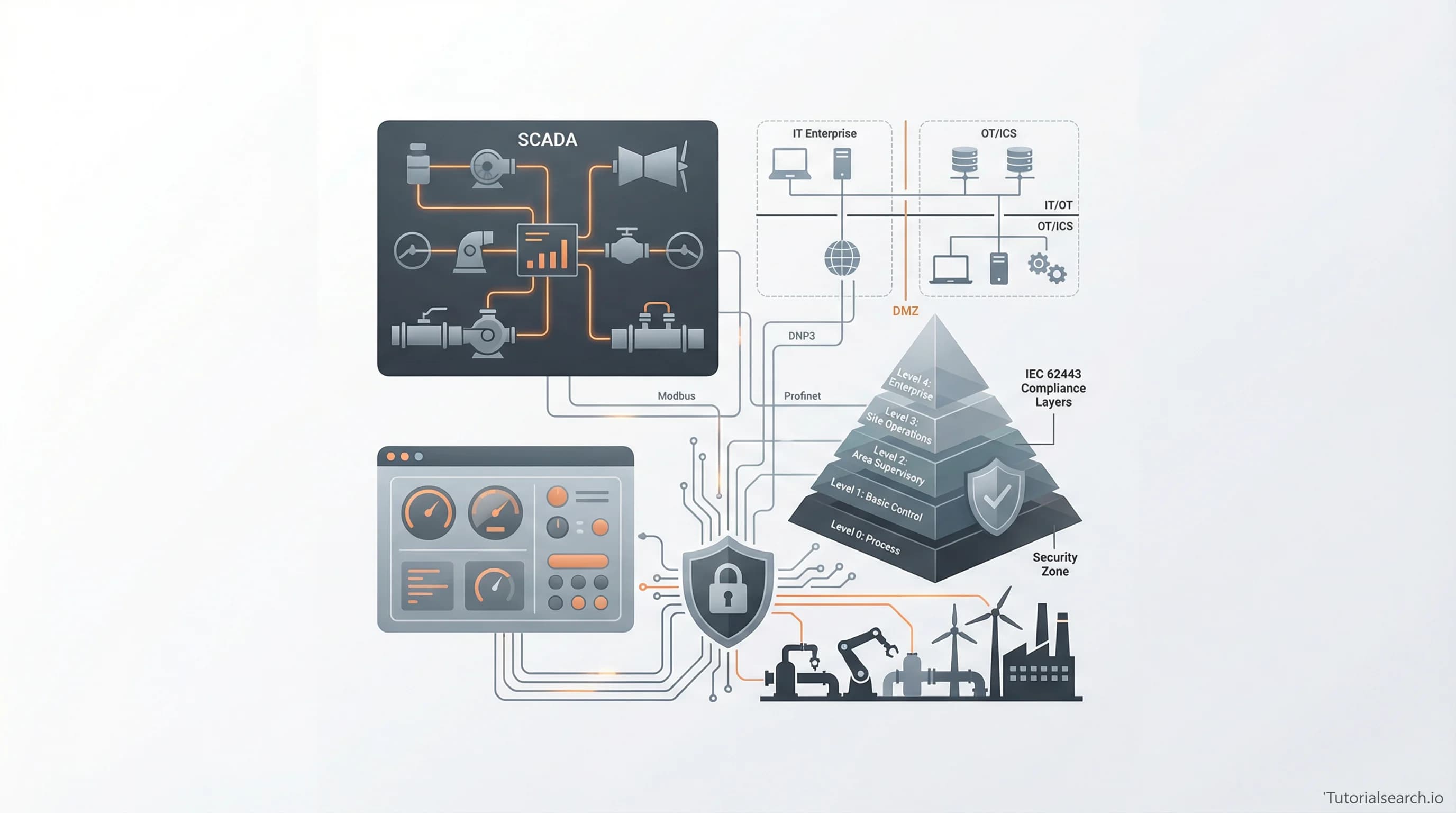
Critical infrastructure runs on industrial security, and as of 2026, understanding OT/ICS security has moved from niche expertise to essential career knowledge. Most people confuse it with regular IT security—they're not. Operational technology systems control physical processes: power grids, water treatment plants, manufacturing floors. A cyberattack here doesn't just steal data; it stops production, harms people, or destabilizes critical services. This guide cuts through the confusion with the courses, resources, and honest assessments I'd actually recommend to someone serious about industrial security.
Key Takeaways
- Industrial security protects operational technology systems differently from traditional IT, requiring OT-specific expertise and standards like IEC 62443
- IEC 62443 certification is the industry standard for industrial security roles, with multiple specialist levels addressing different organizational needs
- Free resources from CISA, ISA, and GitHub repositories provide practical foundations before investing in paid courses
- Industrial security roles typically require dual knowledge of both cybersecurity principles and control systems (SCADA, PLCs, protocols)
- Community engagement through forums, Discord servers, and professional networks accelerates learning faster than solo study
In This Article
- The Best Industrial Security Courses Worth Your Time
- Free Resources That Actually Work
- GitHub Repositories Worth Starring
- YouTube Channels for Industrial Security Learning
- Books and Deep Learning Resources
- Where to Connect with Industrial Security Professionals
- The One Thing Most People Get Wrong
- FAQ
The Best Industrial Security Courses Worth Your Time {#best-courses}
I evaluated every major course on the market. Here's what separates the good from the "save your money."
Industrial Cyber Security from IEC62443 for ICS/OT (Udemy) — [Editors' Choice] — Sourabh Suman's course has 5,700+ students because it actually works. It covers IEC 62443 fundamentals, SCADA architecture, and practical risk analysis. Rating: 4.14/5. This is my top pick because it balances theory with the real-world scenarios you'll encounter.
IEC 62443 Risk Assessment Specialist Practice Exams (Udemy) — OT Cyber K.'s practice exams are the gold standard for exam prep. 207 students, 4.62/5 rating. If you're targeting the IC32 certification, these drills catch gaps in your knowledge before the real exam.
IEC 62443 Cybersecurity Fundamentals Specialist (IC32) (Udemy) — Master Prep's beginner-friendly IC32 foundation course. 155 students, 3.16/5. For absolute newcomers to OT, it scaffolds concepts you'll need.
Pentesting Industrial Control Systems Workshop (Udemy) — 4.49/5 rating, highly technical. This is for people who already know basic security and want to understand attack vectors against SCADA.
SCADA Full Course: Basic to Advance (Udemy) — 4.48/5, great for grounding yourself in SCADA architecture before diving into security frameworks.
OT Cyber Security 101 (Udemy) — [Editors' Choice] — Diego Espitia's compact course on OT security fundamentals. Only 7 students but 5.0/5 rating. For IT security professionals jumping into OT, this compresses essentials efficiently.
These six are where your tuition dollars actually land.
Free Resources That Actually Work {#free-resources}
Paid courses matter, but you can get surprisingly far for free.
NISPOM - National Industrial Security Program Operating Manual — The definitive federal manual for protecting classified information in industrial contexts.
CISA Critical Infrastructure Security Advisories — Real attack campaigns, real mitigations. CISA releases weekly alerts on active threats targeting industrial systems.
ISA/IEC 62443 Quick Start Guide — Free overview of the IEC 62443 standards framework. Start here before any paid course.
Awesome Industrial Control System Security — Curated list with 2,400+ stars. Every tool mentioned has been vetted by practitioners.
Industrial Cyber — Weekly articles on OT security trends, regulatory updates, and threat analysis. No paywall.
Security Automation and Control Systems Guide — Three-page guide on core ICS security concepts.
The government publishes excellent material here—take advantage.
GitHub Repositories Worth Starring {#github-repos}
Industrial security thrives on open-source tools and documentation. These repositories are where professionals actually work.
Awesome Industrial Protocols — Security-focused list of industrial network protocols (Modbus, DNP3, Profibus, etc.).
GRASSMARLIN — Open-source network situational awareness for industrial systems from the U.S. NSA. Passive network reconnaissance for SCADA/ICS environments. Pairs well with ethical hacking courses.
Industrial Exploitation Framework — Python-based framework for testing industrial device vulnerabilities. Dangerous in production, invaluable in test environments.
Awesome Security — Broader security curated list with 12,000+ stars including industrial sections.
YouTube Channels for Industrial Security Learning {#youtube-channels}
Need a web app built? Hire the team behind TutorialSearch.io
We ship fast, production-grade full-stack apps (Next.js, React, edge infra) — the same stack that powers this site.
Video learning works for many. These channels publish industrial security content worth your time.
The Cyber Mentor — Penetration testing fundamentals with OT/ICS focus. Clear teaching, practical tools.
Hak5 — Hardware hacking, offensive security tools, and OT security episodes in short, consumable format.
IppSec — CTF walkthroughs teaching security thinking patterns. Methodology transfers directly to industrial scenarios.
John Hammond — Malware analysis and threat breakdowns. Understanding attacks prepares you to defend industrial networks.
SANS Institute Cyber Aces — Free cybersecurity fundamentals. Blue team (defensive) content dominates here.
Industrial Cyber YouTube — Industrial-specific threat analysis and defense strategies.
Books and Deep Learning Resources {#books}
Books have longer shelf lives than courses. These are worth reading.
Master ISA/IEC 62443: Essential Security Framework for Industrial Systems by Diego Rodrigues — Practical application guide with real industrial examples. Available through Google Books. For implementing security programs, this walks you through the framework.
For structured book learning, search for more security management training to round out your knowledge.
Where to Connect with Industrial Security Professionals {#community}
You learn faster surrounded by practitioners than studying alone.
The Many Hats Club Discord — Information security focused community with 10,000+ members. Industrial security channel is active and people actually answer questions.
r/cybersecurity — 400,000+ members. Industrial security threads appear regularly. No stupid questions—only unanswered ones.
ISA Online Community — Vendor-neutral professional community for automation experts. Networking, webinars, research publications.
The One Thing Most People Get Wrong {#one-thing-wrong}
Here's my honest contrarian take: People treat industrial security like regular IT security with a different label. It's not. Regular security assumes you can patch every system, take servers offline for maintenance, and tolerate downtime. Industrial systems can't. A power plant can't go dark for Windows updates. A manufacturing line losing 15 minutes costs thousands. Your security architecture must work within operational constraints, not demand operators accept your solutions. Courses that ignore this create security theater, not real protection. The best industrial security professionals understand operations first and security second. Learn SCADA architecture, understand production schedules, talk to the people running systems. Then layer security around reality, not theory.
Related Industrial Security Skills Worth Exploring
If industrial security interests you, these related skills pair well:
- Security Certification — IEC 62443 is one path; CompTIA Security+, CISSP, and CISM provide complementary credentials.
- Cloud Security — As OT and IT converge, cloud security knowledge protects edge systems and remote monitoring infrastructure.
- Ethical Hacking — Penetration testing skills apply directly to assessing industrial control systems.
- Network Security — Industrial networks require specialized knowledge, but fundamentals underpin everything.
FAQ {#faq}
How long does it take to learn industrial security?
Three to six months to reach competency if you already know IT security. If starting from scratch, expect 12-18 months to be genuinely useful. IEC 62443 certification takes 2-3 months of study after foundational knowledge. The timeline compresses with mentorship from experienced practitioners.
Do I need SCADA experience before learning industrial security?
Not before, but very early. You don't need to be an automation engineer, but you should understand how SCADA systems work operationally. The courses listed above teach this. Without that context, security frameworks feel abstract.
Can I get a job with industrial security skills?
Yes. Industrial security roles are chronically under-staffed. Job titles include "ICS Security Engineer," "OT Security Analyst," "Critical Infrastructure Protection Specialist," and "IEC 62443 Lead Assessor." Salary ranges from $85K to $200K+ depending on experience. Utilities, energy companies, manufacturing, and government agencies all hire constantly. Certification (IC32+) and one portfolio project demonstrating risk assessment opens doors quickly.
What's more valuable—IC32, IC33, or IC34 certification?
IC32 is the foundation—everyone starts here. IC33 matters if you're designing systems. IC34 matters if you're managing ongoing security. In practice, IC32 alone opens 80% of job doors. If budget-constrained, get IC32 first.
How is industrial security different from traditional cybersecurity?
Three critical differences: First, uptime is non-negotiable—breaches that stop operations are worse than data theft. Second, legacy systems dominate—you're securing 20-year-old equipment that can't be patched. Third, safety implications mean attacks can harm people physically. These constraints flip standard security advice upside down.