Database Design Courses and Resources That Deliver
Database design is the skill most developers skip — and the one that causes the most expensive problems later. Here are the best courses, free resources, GitHub repos, and tools to learn it properly.
Hire the developers behind TutorialSearch.io
We built this site — full-stack web apps, AI integration & automation. Tell us what you need and we'll build yours.
Database design is the skill most developers skip — and it's the one that creates the most expensive problems later.
The pattern is predictable: someone learns SQL, builds a project, and ships it. Months later, the tables are a mess. Queries slow down. Adding new features means reworking half the schema. What went wrong isn't the code — it's the foundation the code sits on.
This is a guide to learning database design properly, with the courses, free resources, tools, and communities that actually help. Whether you're building your first app or trying to clean up a schema that got away from you, here's what's worth your time.
Key Takeaways
- Database design mistakes made early become costly to fix once real data exists — learning it properly upfront saves significant pain.
- Normalization (organizing tables to reduce redundancy) is the foundational skill every database designer needs to master.
- Free database design resources, including freeCodeCamp tutorials and GitHub repos, are genuinely solid starting points.
- Caleb Curry's database design courses are among the best-rated for depth and clarity.
- Practice drawing ER (entity-relationship) diagrams with free tools before writing any SQL — the visual thinking is what makes everything else click.
In This Article
- What Database Design Actually Teaches You
- Database Design Courses That Are Worth Your Money
- Pick Your Path: A Quick Database Design Decision Guide
- Free Database Design Resources That Teach You the Real Thing
- Database Design GitHub Repos Worth Starring
- Database Design on YouTube: Who Actually Explains It Well
- Database Design Books for Going Deeper
- Free Tools to Practice Database Design Today
- The Database Design Communities Where People Actually Help
- Related Database Skills Worth Exploring
- Frequently Asked Questions About Database Design
What Database Design Actually Teaches You
A lot of beginners confuse database design with SQL. They're different skills. SQL is the language you use to query a database. Database design is the process of deciding what the database should look like before you write the first query.
Think of it this way: SQL is how you drive. Database design is how the road was built.
The four core skills in database design are:
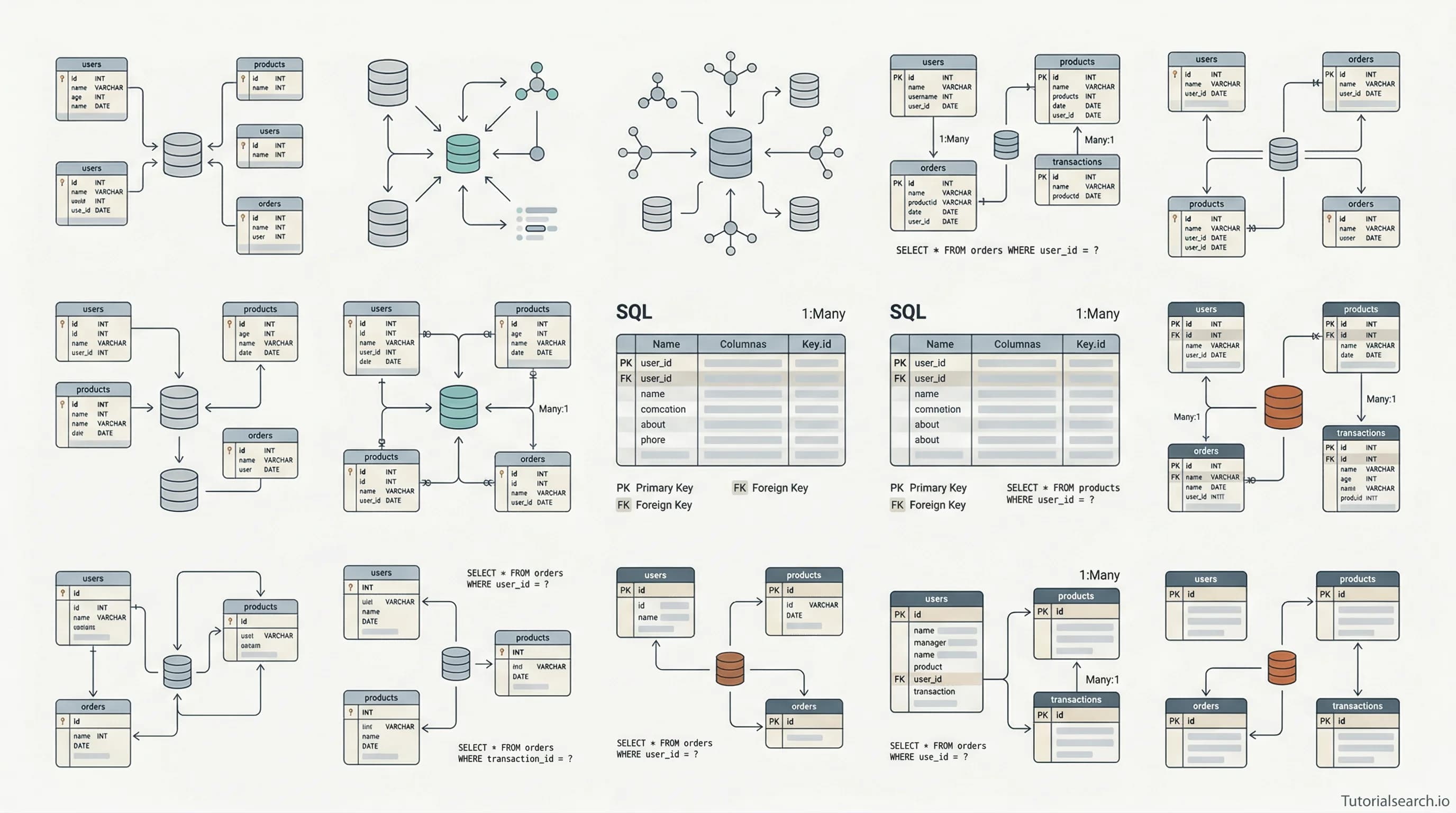
- Entity-relationship modeling (ERDs) — drawing diagrams to map out what data exists and how it connects before writing a single table definition
- Normalization — organizing tables to eliminate redundancy and prevent data inconsistencies (this is the big one; more on it below)
- Key design — understanding primary keys, foreign keys, composite keys, and natural vs. surrogate keys
- Performance thinking — designing with indexes in mind, anticipating query patterns, avoiding joins that will slow you down at scale
You can browse 204 database design courses on TutorialSearch.io across skill levels and platforms. Below are the ones worth focusing on.
Database Design Courses That Are Worth Your Money
1. Database Design and MySQL by Caleb Curry (Udemy) [Editors' Choice]
⭐ 4.6 | 63,000+ students | Paid
If you only take one course from this list, make it this one. Caleb Curry is one of the most underrated database educators online. He doesn't just show you the "what" — he consistently explains the "why," and that's what separates a good database design course from a forgettable one. The MySQL integration means you're not just learning theory; you're applying it to a real system.
- Full normalization walkthrough with real examples
- Entity-relationship diagrams from scratch
- One-to-many and many-to-many relationships done right
- Practical MySQL implementation throughout
2. Database Design by Caleb Curry (Udemy)
⭐ 4.1 | 93,000+ students | Paid
The conceptual companion to the MySQL course above. This one is more focused on the foundations: normalization theory, ER diagram methodology, and data modeling principles. Many students take both — start here if you want the theory first, or jump straight to Database Design and MySQL if you prefer to learn by doing.
3. Database Design and Management by Visual Paradigm (Udemy) — FREE
⭐ 4.3 | 96,000+ students
The most popular free course on the list. Visual Paradigm builds professional ER diagram tools, so they understand database design from a practitioner's standpoint. Free, surprisingly thorough, and a great starting point before spending money on a longer course.
4. Relational Database Design Bootcamp (Udemy) [Editors' Choice]
⭐ 4.7 | Paid
Smaller audience, but the rating doesn't lie. This course is for developers who already know SQL basics but never formally studied design principles — the gap between "I can write queries" and "I can design a schema that holds up." High signal-to-noise ratio throughout.
5. Database Design Introduction by Intellezy Trainers (Udemy)
⭐ 4.5 | 10,000+ students | Paid
Clean, focused, assumes nothing. Intellezy builds structured corporate training content, and it shows — the material is well-organized and doesn't meander. Good if you want a lighter introduction before committing to a longer program.
6. Data Modeling and Database Development [2025] (Udemy)
⭐ 4.5 | Paid
One of the most up-to-date courses here. Covers the full lifecycle from data modeling (the conceptual step before schema design) through to physical implementation. Useful for developers building production systems who need the complete picture.
7. Database Design for Relational Databases using SQL Server by Daniel Tait (Udemy)
⭐ 4.5 | 903 students | Paid
Specifically for teams working with Microsoft SQL Server. Tait's approach is practical — fewer abstract examples, more real design decisions. If SQL Server is your platform, this is worth picking up.
8. Database Design & SQL Development for Beginners (Udemy)
⭐ 3.6 | Paid
Honest assessment: the rating is mediocre. But it covers SQL development alongside design, which is useful if you genuinely want both in one package without bouncing between courses. Manage expectations.
Pick Your Path: A Quick Database Design Decision Guide
Everyone recommends starting with normalization theory. That's not always the right answer. Here's a quick guide based on where you're starting from:
| Your situation | Best starting point |
|---|---|
| Complete beginner, no SQL knowledge | Visual Paradigm free course + dbdiagram.io to practice |
| Know SQL, never studied design formally | Caleb Curry's Database Design course (conceptual) |
| Know SQL and want hands-on | Caleb Curry's Database Design and MySQL |
| Building on SQL Server at work | Daniel Tait's SQL Server course |
| Want free-only resources | Visual Paradigm Udemy + freeCodeCamp normalization + Caleb Curry YouTube |
| Want to go deep on theory | "Database Design for Mere Mortals" (book) |
Free Database Design Resources That Teach You the Real Thing
Paid courses aren't the only path. Some of the best database design education is completely free.
freeCodeCamp — Database Normalization (1NF, 2NF, 3NF) [Editors' Choice]
This is the best free normalization tutorial available online. It walks through each normal form with real table examples — showing the messy version, explaining the problem, then showing the fix. Bookmark this. You'll return to it.
GeeksforGeeks — Database Design Ultimate Guide
Comprehensive and free. Covers planning, normalization, best practices, and common pitfalls in depth. GeeksforGeeks can be dense on other topics, but the database design content is well-organized.
Microsoft Learn — Database Normalization Description
Microsoft's own documentation on normalization is surprisingly beginner-friendly. Clear terminology, practical examples, no unnecessary jargon. Better written than most tutorials on the topic.
DigitalOcean — Database Normalization Tutorial
Covers 1NF through BCNF (Boyce-Codd Normal Form — the stricter version of 3NF) with concrete examples. DigitalOcean's community tutorials are consistently high quality, and this one is no exception.
Database Star — Step-by-Step Normalization Guide
Real-world examples treated as a process, not just a set of rules. Good for learners who get more from seeing how decisions unfold than from reading definitions.
Redgate — How to Learn Database Design
A thoughtful strategy guide for approaching the subject. Redgate makes database tooling for professionals, so the advice is grounded in what actually matters in production environments.
Since database design and SQL are deeply connected, pairing these free resources with SQL Essentials courses on TutorialSearch.io is a smart combination — there are 165 SQL Essentials courses available.
Database Design GitHub Repos Worth Starring
Hire the developers behind TutorialSearch.io
We built this site — full-stack web apps, AI integration & automation. Tell us what you need and we'll build yours.
GitHub has some genuinely useful database design resources that most people haven't found.
A curated collection of tutorials, articles, and tools specifically for schema design. Well-maintained and focused — it hasn't become the kind of unfocused dump that some "awesome" lists turn into.
database-design by alextanhongpin [Editors' Choice]
This one is underrated. It's a practical reference guide for real design decisions: field naming conventions, handling soft deletes, modeling audit trails, dealing with time-sensitive data. The kind of knowledge that courses skip but you eventually learn the hard way in production.
Focused on tooling rather than learning material: schema migration tools, diagram generators, query analyzers, GUI clients. If you want to level up your day-to-day workflow, this is where to look.
Maintained by PingCAP (the company behind the TiDB distributed database), this repo goes deeper into database internals — storage engines, transaction models, distributed systems. Better suited for intermediate learners who want to understand what happens beneath the schema.
Database Design on YouTube: Who Actually Explains It Well
Caleb Curry (YouTube)
His free database design series on YouTube runs 8+ hours and covers the same material as his paid Udemy course — concepts, normalization, MySQL implementation. Same clear teaching style, completely free. If you want to test the waters before paying for a course, start here. Most learners who watch his YouTube series end up buying the course anyway because the teaching is that good.
Their DBMS (Database Management System) playlist runs 27+ videos covering database design theory systematically. It's more academic than Caleb Curry — closer to what you'd get in a university course. The explanations of ERDs and normalization are excellent. Good if you want rigorous foundations rather than practical shortcuts.
Database Star (Ben Brumm)
Ben focuses specifically on SQL and database topics instead of trying to be a general-purpose coding channel. His videos on query optimization and schema design are worth watching, especially once you move past the basics. If you also want to explore database administration skills, his channel covers that territory well.
Database Design Books for Going Deeper
Sometimes a course isn't enough. These books cover the subject with more depth than any video series.
Database Design for Mere Mortals by Michael J. Hernandez
The standard recommendation — and it's earned the reputation. Hernandez demystifies relational design without dumbing it down. He covers planning, tables, primary and foreign keys, normalization, and data integrity in a way that's genuinely readable. Widely used in university courses and still the first book most practitioners recommend to beginners.
Grokking Relational Database Design by Qiang Hao and Michail Tsikerdekis (Manning Press)
A newer entry that takes a visual, example-driven approach. Manning's "Grokking" series is known for making hard topics click, and this one lives up to that. Covers field naming, normalization, and data hygiene in a friendly format. Good for developers who learn better from diagrams than from dense text.
Beginning Database Design Solutions by Rod Stephens
Practical focus throughout: normalization patterns, design anti-patterns to avoid, real-world examples, and exercises. The exercises matter — database design is a skill you develop by doing problems, not just reading about them.
For learners who want structured course options alongside their reading, the SQL Mastery courses on TutorialSearch.io pair well with all three books.
Free Tools to Practice Database Design Today
Reading about database design is useful. Drawing your first ER diagram is where it actually clicks. These tools are all free to start.
The tool most developers reach for first. Free, browser-based, no account required to start. You write a simple markup language — something like Table users { id int [pk] } — and it generates a clean ER diagram in real time. Fast feedback loop for learning.
The most versatile free diagramming tool available. Supports ER diagrams, works in the browser or as a desktop app, saves to Google Drive or locally. The interface takes a few minutes to learn, but it's powerful and completely free.
Free plan available. The standout feature: SQL import and export. You can generate a diagram from an existing database schema, or export your design directly to SQL. That import/export workflow is genuinely useful once you're comfortable with the basics.
The combination of dbdiagram.io and the free Visual Paradigm course on Udemy gives you everything needed to practice database design at zero cost.
The Database Design Communities Where People Actually Help
Learning in isolation only gets you so far. These communities are worth joining.
r/Database (Reddit)
The most active database-focused subreddit. The discussion is practical and informal — people post schema designs for review, ask whether they've normalized correctly, and debate design decisions. The quality of answers varies, but the good ones are very good.
Database Administrators Stack Exchange
The Q&A format suits database questions well. You can search for specific problems — "how to model a many-to-many relationship with attributes," "3NF violation in my schema" — and usually find detailed answers. More rigorous than Reddit, less conversational.
The Programmer's Hangout Discord has a dedicated #databases channel. If you prefer real-time conversation over forum posts, Discord communities are active and generally welcoming to beginners.
If database design leads you toward enterprise work, the SQL Advanced courses on TutorialSearch.io (144 options) are the natural next step from design fundamentals.
Related Database Skills Worth Exploring
Database design doesn't exist in isolation. These skills connect directly to it:
- SQL Proficiency — 524 courses. Design without SQL is incomplete. The two disciplines reinforce each other constantly.
- Database Administration — 286 courses. After you design it, someone has to run it. Administration covers backups, monitoring, performance tuning, and security.
- NoSQL Databases — 260 courses. Not every problem needs a relational solution. Understanding NoSQL helps you choose the right tool for the right job.
- SQL Server — 196 courses. Microsoft's enterprise database platform. Essential for teams working in .NET environments.
- Database Skills — 161 courses. A broader category covering everything from schema modeling to query optimization and beyond.
Frequently Asked Questions About Database Design
How long does it take to learn database design?
The core concepts — ERDs, normalization to 3NF, key design basics — take most people 2-4 weeks of consistent study. Getting comfortable enough to design production schemas from scratch usually takes 3-6 months of hands-on practice. The real learning accelerates when you hit actual problems: a query that's slower than expected, a schema that makes a new feature hard to add. Those moments teach more than any tutorial.
Do I need to know SQL before learning database design?
Not strictly, no. You can learn ERDs and normalization theory before writing a query. That said, most good database design courses cover both together, and understanding SQL makes it much easier to test whether your design actually works. If you're starting from zero, exploring SQL Essentials courses alongside design materials is the most efficient path.
Can I get a job with database design skills?
Yes. Database design is a valued skill in backend development, data engineering, and database administration roles. Many job listings for backend engineers and data analysts expect the ability to design schemas, not just query them. Pairing database design with SQL proficiency and hands-on experience with one major platform — PostgreSQL, MySQL, or SQL Server — makes you genuinely competitive in the job market.
What is normalization in database design?
Normalization is the process of organizing your database tables to reduce redundancy and prevent data anomalies. It works in stages called "normal forms." First Normal Form (1NF) means each column holds one value with no repeating groups. Second Normal Form (2NF) means every non-key column depends on the whole primary key. Third Normal Form (3NF) means no non-key column depends on another non-key column. Most production databases target 3NF. The freeCodeCamp normalization tutorial is one of the clearest free explanations of this process available.
What's the difference between a relational and a NoSQL database?
A relational database stores data in structured tables with defined relationships and a strict schema. PostgreSQL, MySQL, and SQL Server are relational. NoSQL databases (MongoDB, Cassandra, Redis) are more flexible — they handle unstructured or semi-structured data and scale horizontally more easily. Database design primarily applies to relational databases, but the conceptual thinking transfers. If you're curious about the other side, NoSQL courses on TutorialSearch.io cover it in depth.
The path forward is simpler than it looks. Start with a free ER diagram tool — dbdiagram.io takes five minutes to learn. Work through the free Visual Paradigm course or Caleb Curry's YouTube series. Then practice by designing schemas for real things: a simple blog, an e-commerce store, a library catalog. The moment your schema has to handle actual relationships between real entities, the theory stops being abstract.
For more database design courses and resources, TutorialSearch.io has 204 options across platforms and skill levels.