The Cloud Applications Path I'd Take If I Were Starting Today
A curated guide to learning cloud applications — top courses, free platforms, GitHub repos, and communities organized around how cloud apps actually work, not how vendors prefer to sell them.
Need a web app built? Hire the team behind TutorialSearch.io
We ship fast, production-grade full-stack apps (Next.js, React, edge infra) — the same stack that powers this site.
Cloud applications are deceptively broad as a learning topic — covering everything from Oracle Fusion ERP modules to serverless functions on AWS Lambda — and that breadth is exactly why most learners stall out. As of 2026, the range of cloud applications courses available has never been richer, but picking the wrong starting point costs real time.
I made exactly that mistake when I first approached cloud. Three weeks into AWS certification prep, I realized I still couldn't answer a simple architecture question a colleague asked: "Why would you use Elastic Beanstalk instead of deploying directly to EC2?" Certifications teach you what services exist. They don't always teach you how applications are designed to use those services well. This guide is organized around the second question.
What you'll find here: courses, free platforms, video channels, GitHub repos, books, and communities — organized around how cloud applications actually work, not how cloud providers prefer to sell their services.
Key Takeaways
- Cloud applications span SaaS, PaaS, and IaaS — and the right starting point depends entirely on your role, not on what vendors recommend
- Understanding cloud application architecture before chasing certifications saves months of backtracking
- The best cloud applications courses combine deployment patterns with real architecture thinking, not just service walkthroughs
- Free platforms like AWS Training and Google Cloud Skills Boost offer hands-on cloud application content that rivals paid courses
In This Article
- Cloud Applications: What You're Actually Learning
- Cloud Application Courses Worth Paying For
- Free Cloud Applications Resources That Hold Their Own
- Cloud Applications on YouTube: Who's Actually Worth Watching
- GitHub Repos for Cloud Applications Practitioners
- Books for Going Deep on Cloud Applications
- SaaS, PaaS, or IaaS: How to Pick Your Cloud Applications Starting Point
- Communities for Cloud Applications Practitioners
- Related Cloud Applications and Testing Skills Worth Exploring
- FAQ
Cloud Applications: What You're Actually Learning
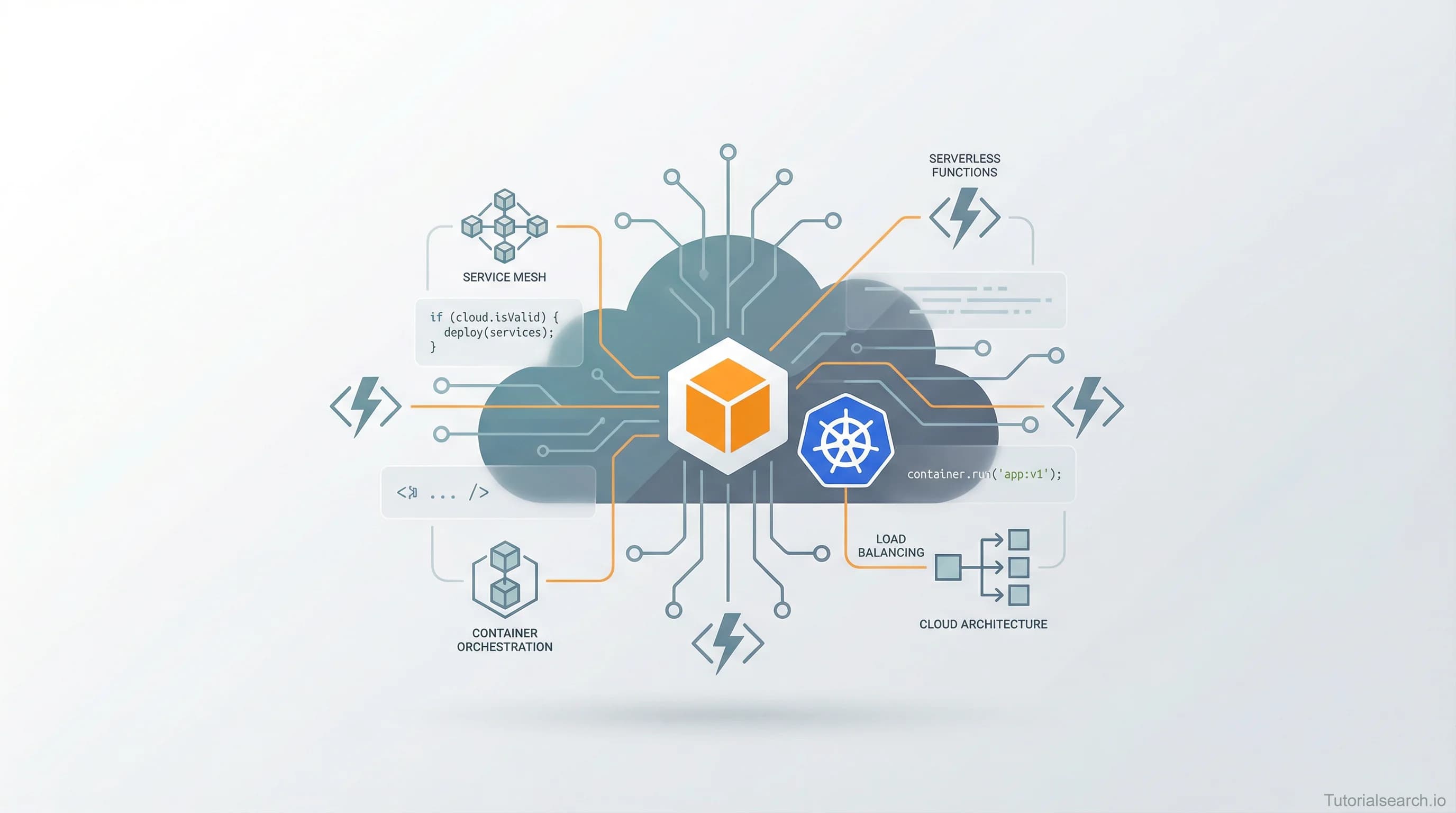
Cloud applications are software products delivered over the internet and hosted on cloud infrastructure rather than local servers. They include everything from the SaaS tools your team uses daily — Slack, Salesforce, Notion — to custom-built microservices running on Kubernetes in AWS or GCP.
The term gets used loosely enough that it's worth being precise. When people say "learn cloud applications," they usually mean one or more of these things: deploying applications to cloud platforms (AWS, Azure, Google Cloud), building applications designed to run natively in cloud environments, migrating existing on-premise software to the cloud, or managing and testing cloud-hosted systems.
The Cloud Native Computing Foundation (CNCF) defines cloud-native specifically as systems that are distributable (loosely coupled services), observable (built-in monitoring and logging), and portable (not tied to specific vendors). That definition shapes what skills actually matter: containerization, service orchestration, and infrastructure-as-code are all downstream of this thinking.
The CNCF's interactive cloud native landscape is worth bookmarking early. It maps every major tool and framework in the ecosystem — from Kubernetes and Prometheus to Helm and Istio — and includes a trail map showing which technologies to learn and in what order. If you're confused about how Docker, Kubernetes, and CI/CD pipelines fit together in a cloud application stack, this visual guide cuts through the noise.
Understanding this taxonomy before picking a learning resource will save you real time. If your job involves deploying Oracle Fusion products, you need entirely different material than someone building microservices on GCP. Both are cloud applications — they're just different disciplines with different tools and different mental models.
Cloud Application Courses Worth Paying For
The paid course market here is noisy, but a handful stand out for actually teaching cloud software architecture and deployment rather than just vendor exam content.
1. Mastering the 12-Factor App: Cloud for Senior Developers (Udemy)
[Editors' Choice] — The 12-factor app methodology is the foundation of every well-designed cloud application, and most developers either haven't heard of it or skipped it in favor of platform-specific content. This course covers all twelve factors with concrete implementation examples rather than abstract descriptions. Rating: 4.7 out of 5. It's aimed at developers who already write code but haven't formalized their thinking about cloud deployment. The sections on config management, dependency isolation, and stateless processes alone justify the price.
If you want to understand why cloud applications are architected the way they are — rather than just memorizing which AWS services to use — start here. It's the one resource on this list that will change how you write software regardless of which cloud platform you end up on.
2. Mastering AWS Serverless: Hands-On with Core AWS Services (Udemy)
[Editors' Choice] — Over 36,900 students have taken this course, and it holds a 4.3 rating for good reason. Anton Voroniuk's teaching style is practical: you spend time actually deploying applications to Lambda, API Gateway, S3, and DynamoDB rather than watching slides about them. Serverless is one of the most important cloud application patterns to understand in 2026. Cloud functions that scale to zero, event-driven architectures, and pay-per-execution pricing aren't just cost optimizations — they're a genuinely different way of thinking about application design.
The course gives you a real deployment workflow and enough architecture context to make confident decisions about when serverless is the right model versus when it isn't.
3. 1Z0-1160-1 Oracle Fusion Applications ERP Foundations (Udemy)
[Editors' Choice] — If your organization runs Oracle Fusion, this is the course to understand the ERP layer of cloud applications. Rating: 4.5. Abdul Khalique's approach is methodical, covering core ERP concepts within the Oracle Cloud framework. The value isn't primarily the certification prep — it's understanding how Oracle Fusion connects modules like financials, supply chain, and HR in a cloud environment, and why those integrations behave the way they do. Enterprise cloud applications are their own discipline, and this is one of the clearest on-ramps into it.
4. Getting Started with Cloud Computing (Udemy)
For learners who need foundation knowledge before specializing in a platform, this course earns its 4.6 rating with a clean walkthrough of core cloud concepts across AWS, Azure, and GCP. It covers IaaS, PaaS, and SaaS models with concrete examples from each platform and gives you the mental framework to understand what you're actually deploying when you spin up cloud resources. Good on-ramp before you go deeper.
5. Cloud Computing & Cloud Native Fundamentals (Udemy)
Rating 4.4. This course bridges the conceptual gap between "cloud computing" as a broad concept and cloud-native application development specifically. It covers container basics, microservices thinking, and the core cloud service models in a way that prepares you for both platform-specific courses and cloud-native development work. More technical than a typical intro course, which is a feature rather than a bug.
Free Cloud Applications Resources That Hold Their Own
The official cloud provider training platforms are genuinely good — and free. This is the contrarian point most paid-course advocates won't tell you: for cloud applications fundamentals, the free platforms from AWS, Google, and Microsoft often teach the material better than third-party courses because their engineers wrote the content from direct production experience.
AWS Training and Certification is one of the best free technical education platforms in tech. AWS offers 600+ free digital courses, and the Cloud Practitioner Essentials pathway covers cloud application concepts with hands-on labs using real AWS infrastructure. You're not watching videos about S3 — you're creating buckets and deploying to them. The labs are what make this worth your time.
Google Cloud Skills Boost offers 3,000+ learning resources with hands-on labs that give you temporary credentials to actual GCP infrastructure. The "Developing Applications with Google Cloud" pathway is particularly useful for understanding cloud-native patterns on GCP. Google created Kubernetes, and that heritage shows in how the content handles container-based applications and orchestration.
Microsoft Learn is the most comprehensive free resource for Azure cloud application development. The "Develop Azure compute solutions" learning path covers deploying applications to App Service, Container Instances, and Azure Functions with interactive exercises. Microsoft Learn has improved substantially — it's now genuinely interactive rather than just documentation dressed up as a course.
Codecademy's Cloud Computing catalog is the best beginner entry point if you need to build mental models before touching any real infrastructure. The interactive exercises mean you're typing commands rather than just reading about them. Shallower than the provider platforms, but less intimidating for learners who haven't worked with CLIs before.
If you want a structured course option that ties these concepts together, the Cloud Computing & Cloud Native Fundamentals course listed in the paid section above covers the conceptual layer that unifies what you'd learn across these free platforms.
Cloud Applications on YouTube: Who's Actually Worth Watching
Need a web app built? Hire the team behind TutorialSearch.io
We ship fast, production-grade full-stack apps (Next.js, React, edge infra) — the same stack that powers this site.
YouTube is legitimately useful for cloud applications content. Deployment workflows, Kubernetes dashboards, and architecture diagrams translate well to video in a way that some other technical topics don't.
TechWorld with Nana is the clearest explanation of Kubernetes, Docker, and cloud-native application architecture available anywhere online. Nana Janashia explains complex orchestration concepts without dumbing them down and without racing through material to hit a time target. The full Kubernetes course covers cloud application deployment patterns better than most paid options. Start there if you're getting into cloud-native development.
Google Cloud Tech publishes technical content from Google's own engineers. The channel covers GCP-specific tools like Cloud Run, Anthos, and Cloud Functions with depth you won't find in third-party content, because the people building those products are explaining them. Valuable once you've chosen GCP as your primary platform.
A Cloud Guru leans certification-focused, but the "ACG Fundamentals" series is worth watching for cloud application architecture concepts independently of certification prep. The explainer videos on cloud service models are among the clearest available and don't require a subscription.
Search for more cloud applications video courses on TutorialSearch to find structured video learning with ratings and student reviews across multiple platforms.
GitHub Repos for Cloud Applications Practitioners
The most useful repos here aren't libraries — they're curated learning paths and reference architectures that orient you in the space.
awesome-cloud-native is a comprehensive curated list of cloud-native tools, frameworks, and tutorials. If you're building cloud applications with containers and Kubernetes, this is your reference. It covers everything from service meshes (Istio, Linkerd) to observability tools (Prometheus, Jaeger) to CI/CD platforms — organized in a way that makes the relationships between tools visible.
awesome-cloud-computing takes a broader view, covering foundational cloud concepts, certification paths, and learning resources across AWS, Azure, and GCP. Useful when you're still getting oriented and need to understand the landscape before committing to a platform.
awesome-google-cloud is maintained by Google's own team and curates GCP-specific resources for cloud application development, ML infrastructure, and data pipelines. If you're building on GCP, this repo keeps you from having to discover useful tools by accident.
Teams responsible for testing cloud applications need familiarity with the same tooling ecosystem — these repos are a good starting point for both developers and QA engineers.
Books for Going Deep on Cloud Applications
Books aren't the fastest path into cloud applications, but for foundational architecture concepts that don't change with every AWS service update, they're worth the investment.
Cloud Native DevOps with Kubernetes by John Arundel and Justin Domingus is the single best book for understanding how cloud applications are built and operated in production. It covers Kubernetes, containers, CI/CD pipelines, and observability in a way that's readable rather than reference-dense. The authors work in production cloud environments and write from that experience rather than from documentation. The chapter on Helm alone has saved developers hours of debugging.
Cloud Computing: Concepts, Technology & Architecture by Thomas Erl is the foundational text for rigorous definitions of cloud service models, deployment patterns, and architectural principles. More dense than Arundel/Domingus, but better for understanding the why behind cloud application design decisions rather than just the how.
Prefer video over reading? Developing Cloud-Native Apps w/ Microservices Architectures (rating: 4.4, Udemy) covers the same conceptual territory in course format, with hands-on examples in a modern microservices stack.
SaaS, PaaS, or IaaS: How to Pick Your Cloud Applications Starting Point
This is the question most beginners get stuck on, and most explanations bury the practical answer in definitional noise. Here's the straight version:
| Model | What You Control | Best For | Learn This First If... |
|---|---|---|---|
| SaaS | Configuration only | Understanding cloud app delivery | You're in QA, testing, or business roles |
| PaaS | Your code + data | App development without infra management | You build apps and want cloud deployment simplified |
| IaaS | VMs, storage, networking | Full infrastructure control | You're in DevOps, systems, or cloud architecture |
| Cloud-Native | Containers, services, config | Modern, scalable, portable apps | You're building new software from scratch |
The honest contrarian take: most resources tell you to start with fundamentals and work up to IaaS. That's often backward. If you're a developer who wants to deploy applications, start with PaaS (AWS Elastic Beanstalk, Google App Engine, Azure App Service). You'll get something working in a real cloud environment within hours. The IaaS concepts will make significantly more sense once you understand what the PaaS layer is abstracting for you — and you'll have a working application to reason about.
The 12-factor app methodology cuts across all four models and is worth reading before you specialize in any of them. It was written by Heroku engineers to describe what makes applications well-suited for modern cloud platforms, and it's aged extremely well.
Communities for Cloud Applications Practitioners
r/cloudcomputing on Reddit is the broadest community for cloud topics. It's active, reasonably high signal, and good for both beginner questions and staying current on cloud application trends. The platform-specific subreddits — r/aws, r/googlecloud, r/AZURE — are worth subscribing to once you've specialized.
DevOps, Programming, and Cloud Discord is one of the more active Discord communities for cloud practitioners. The #clouds and #kubernetes channels see real questions from people working on production cloud applications, not just certification prep. The signal-to-noise ratio is better than most tech Discords.
The CNCF Slack community hosts dedicated channels for cloud-native practitioners — #kubernetes, #helm, #prometheus — where ecosystem conversations happen closest to the source. If you're working with open-source cloud-native tooling, this is where the maintainers and heavy users are.
Related Cloud Applications and Testing Skills Worth Exploring
Cloud applications don't exist in isolation. These skills complement what you're building:
- Automation Testing — Cloud environments are designed for high deployment frequency. Manual testing doesn't scale with that cadence, making automation essential for anyone responsible for cloud application quality.
- Test Design — Cloud applications introduce unique test design challenges: distributed systems, eventual consistency, and network partitions create failure modes that don't exist in monolithic on-premise software.
- Data Analysis — Cloud applications generate telemetry constantly. Understanding how to analyze logs, traces, and metrics is inseparable from understanding how cloud apps actually behave under load.
- Software Quality — The quality engineering practices that govern cloud environments, from continuous integration pipelines to chaos engineering, form the operational backbone of any serious cloud application deployment.
FAQ
How long does it take to learn cloud applications?
For a developer with existing programming experience, 2–3 months of focused work gets you to the point of deploying and managing simple cloud applications independently. Enterprise platforms like Oracle Fusion take longer — expect 3–6 months to build meaningful proficiency. Certifications are a parallel track and shouldn't be confused with application-level competency. You can be certified and still not know how to architect a well-designed cloud application.
Do I need programming experience to learn cloud applications?
It depends on your goal. Running and administering cloud applications — IT operations, systems administration, Oracle Fusion configuration — requires minimal code. Building cloud applications from scratch requires solid fundamentals in at least one backend language. Kubernetes and cloud-native development specifically require comfort with YAML, command-line tools, and often Go or Python. The Oracle Fusion path is more configuration and process-oriented, making it accessible to non-developers.
Can I get a job with cloud applications skills?
Yes — cloud skills remain among the most in-demand in tech as of 2026. Roles that value this directly include cloud engineer, DevOps engineer, cloud architect, SRE (site reliability engineer), and cloud applications administrator. Oracle Fusion specialists are specifically in demand at large enterprises running ERP on Oracle Cloud. AWS experience combined with hands-on application deployment practice — not just certification — is a reliable path to cloud engineering roles. The market for cloud roles has expanded significantly, and the platforms and patterns covered in this guide map directly to what hiring teams are looking for.
What are the key challenges of testing cloud applications?
Cloud applications present testing challenges that on-premise software doesn't. The distributed nature means failures can be partial and intermittent rather than total. Network latency is variable and can affect test results. Autoscaling changes the environment under test dynamically — the system you test at 10 users behaves differently at 10,000. Security surfaces expand with each integrated cloud service. Testing cloud applications effectively requires specialized tooling (JMeter, k6 for load testing), solid observability practices, and a testing strategy designed for cloud-specific failure modes.
What's the difference between testing cloud vs. on-premise applications?
On-premise testing happens in a controlled, static environment. Cloud testing happens in dynamic, multi-region infrastructure that changes under load. Cloud applications also require testing cloud provider-specific configurations — IAM policies, network security groups, service quotas, region failover — that have no on-premise equivalent. The shift-left principle, testing earlier in the development cycle, is more critical in cloud environments because deployment happens faster and errors propagate quickly across distributed services.