Business Analytics From Zero — What I'd Actually Recommend
Business analytics skills command $106K+ average salaries. Here are the courses, free resources, YouTube channels, and GitHub repos worth your time.
Want AI in your product? Hire the team behind TutorialSearch.io
LLM features, RAG, agents and automation wired into a real product — built by the devs who shipped this site.
Business analytics is one of the most career-ready skills you can build right now. The average business analyst salary in the US sits at $106,000 — and that number jumped by $20,000 since 2024 alone. Data-related jobs are growing 35% this decade, with demand outpacing supply by 30–40% through 2027. The global analytics market is on track to hit $133 billion by 2026.
That's not a niche skill. It's infrastructure. Every company that makes decisions — which is every company — needs people who can read data and act on it.
You can start browsing 327+ business analytics courses right now to see what's available across skill levels.
And here's the stat that most people skip over: analytics certifications boost salaries by an average of 16.6%. Not "could boost." Average.
Key Takeaways
- Business analytics salaries average $106K in the US, with senior roles reaching $140K+
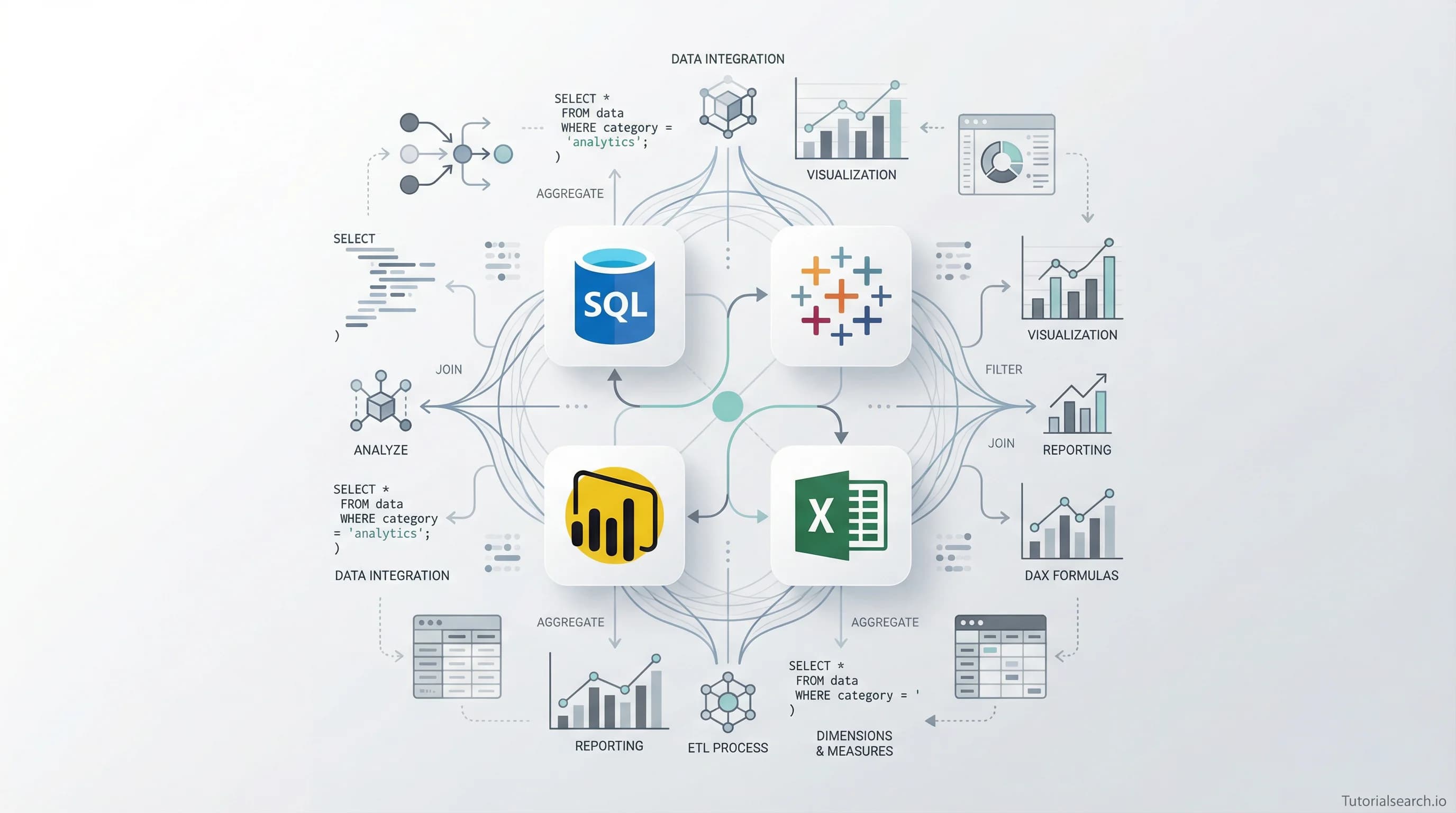
- The core tools are SQL, Excel, Python, and one BI platform — Tableau or Power BI
- You don't need a degree to get hired; courses plus portfolio projects are a proven path
- Free resources from Google, Coursera, and freeCodeCamp cover the essentials well
- Business analytics is not data science — it focuses on past data to answer current business questions, not future predictions
In This Article
- Why Business Analytics Skills Pay Off Right Now
- The Business Analytics Courses Worth Your Money
- Free Business Analytics Training That's Actually Useful
- Business Analytics YouTube Channels Worth Subscribing To
- Business Analytics GitHub Repos Worth Starring
- Books That Build Your Business Analytics Foundation
- Where Business Analytics Professionals Actually Gather
- Related Skills Worth Exploring
- Frequently Asked Questions About Business Analytics
Why Business Analytics Skills Pay Off Right Now
Most people come to business analytics from one of two directions. Either they're stuck in a role where they know data matters but don't know how to use it. Or they're switching careers and see analytics as the most accessible entry point into tech-adjacent work.
Both are right.
The tools at the core of business analytics — SQL, Excel, Python, Tableau or Power BI — are learnable in months, not years. They're also the exact tools that show up in job postings for roles paying $80K to $130K. That gap between "learnable" and "well-paid" is unusually small in this field.
One thing that surprises people: business analytics is not the same as data science. Data science explores future predictions using machine learning and statistical modeling. Business analytics interprets past data to solve current problems. It's more action-oriented. You're not building models — you're answering the questions that keep a VP up at night.
If you want to explore the broader data science field, many of the same tools apply. But business analytics has its own distinct learning path.
The Business Analytics Courses Worth Your Money
Before I list these, one honest confession: most people starting out pick the wrong first course. They go straight to Python tutorials because Python sounds impressive. But if you're headed into business analytics — not data science — you'll make more progress starting with SQL and Excel. Those are the languages your future boss actually speaks.
With that said, here are the courses that deliver.
The Pick-Everything-Up Option
Business Analytics: Excel, Stats & Looker Studio [3-in-1] by Start-Tech Academy — [Editors' Choice]
- Rating: 4.7 | 37,500+ students | Udemy
- This is the one I'd recommend first for most people. It covers three tools in one course: Excel for data manipulation, statistics for interpretation, and Looker Studio (formerly Google Data Studio) for visualization. The instructor explains the why behind each technique, not just the how. You walk away with an actual toolkit, not just familiarity.
- Topics: PivotTables, statistical fundamentals, dashboard building, data storytelling
Business Analytics Complete Course by Edcorner Learning
- Rating: 4.5 | 17,600+ students | Udemy
- Good for learners who want a single course that touches every major concept. More breadth than depth, which is the right trade-off when you're still figuring out which areas to specialize in.
Business Analytics Excelerator: Excel Wizardry Revealed by Isabelle Arrieta — [Editors' Choice]
- Rating: 4.8 | Udemy
- Excel gets dismissed as "basic," but most business analysts use it every day. This course covers the advanced functions that separate competent Excel users from the ones who can actually build analytical models. The 4.8 rating is well earned.
Business Analytics using Data Science by Human and Emotion: CHRMI
- Rating: 4.8 | Intermediate | Udemy
- For analysts who already know the basics and want to layer in machine learning concepts. The blend of business thinking with data science methods is exactly what separates senior analysts from junior ones.
Fundamentals of Business Analytics
- Rating: 4.5 | Udemy
- A solid starting point if you want to understand the concepts before jumping into tools. Covers the theoretical framework that makes everything else click faster.
Business Analytics: Analysing Third-Party Logistics Business — Free
- Rating: 3.7 | Udemy | Free
- Niche, but useful. If you work in logistics, supply chain, or operations, this course applies analytics directly to your world. The rating isn't high, but the specificity is the point.
For a broader learning path that combines Python, SQL, Excel, and Power BI, check out Become a Data Analyst: Python, SQL, Excel & Power BI. It's worth it if you want to move toward a full analyst role rather than just analytics competency within another job.
Pick Your Business Analytics Path
Not everyone comes to business analytics for the same reason. Here's a quick decision guide:
| If you are... | Start with... | Then move to... |
|---|---|---|
| Complete beginner | Excel + basic stats | SQL, then a BI tool |
| Non-tech professional wanting data literacy | Looker Studio or Power BI | Excel analytics |
| Career switcher targeting analyst roles | SQL fundamentals | Python for analysts |
| Current analyst wanting to advance | Python + statistics | Machine learning basics |
| Manager wanting to understand your data team | BI tools overview | Business analytics concepts |
Free Business Analytics Training That's Actually Useful
Everyone recommends Coursera and calls it done. So let me go a level deeper.
Google Data Analytics Professional Certificate (Coursera) — [Editors' Choice]
This is the free-to-audit option that genuinely delivers. It covers SQL, R, Tableau, and spreadsheets across eight courses. The certificate carries real weight with hiring managers because Google's name is on it. You can audit most content free, or pay for the certificate (~$49/month). If you're career switching, pay for the certificate.
Great Learning Academy — Business Analytics for Beginners (Free)
A focused free course that covers data types, manipulation, and basic visualization. No account required to start. Good for testing whether analytics actually interests you before committing to a paid course.
freeCodeCamp Data Analysis with Python (Free)
Project-heavy. You work through five real datasets. The projects become portfolio pieces, which matters more than any certificate when you're job searching. The Python is intermediate-level, so some SQL and Excel experience first helps.
Khan Academy Statistics and Probability (Free)
This one surprises people. You don't need advanced math for business analytics, but you do need solid statistical intuition. Mean, median, correlation, statistical significance — Khan Academy covers all of it better than most paid courses. The videos are short and the practice problems reinforce everything.
Codecademy Learn SQL (Free tier available)
SQL is the language that connects business analytics to actual databases. This interactive course teaches you to write real queries within 10 hours. The free tier covers most of what beginners need.
If data visualization is where you want to focus, there are 1,500+ specialized courses to explore there.
Business Analytics YouTube Channels Worth Subscribing To
Want AI in your product? Hire the team behind TutorialSearch.io
LLM features, RAG, agents and automation wired into a real product — built by the devs who shipped this site.
These aren't just tutorial channels. They're how you stay current when the tools keep changing.
Alex The Analyst (YouTube)
Alex made his channel by documenting his own career switch into data analytics. The content is practical — SQL projects, Excel walkthrough, portfolio advice. He doesn't talk about analytics; he shows you what it looks like on the job. The "how to get your first data analyst job" content is especially good.
Codebasics (YouTube)
Hindi-speaking instructor teaching in English, which makes his explanations unusually clear — he can't rely on assumed cultural shorthand. The Python analytics and SQL videos are excellent. The project tutorials give you real deliverables, not just toy datasets. Subscribe and go straight to the project series.
Guy in a Cube (YouTube) — [Editors' Choice]
Adam Saxton and Patrick Leblanc are the go-to channel for Power BI. Microsoft employees turned content creators, they cover everything from DAX formulas to the latest Microsoft Fabric updates. If Power BI is your chosen BI platform, this channel is non-negotiable.
StatQuest with Josh Starmer (YouTube)
Josh explains statistics and machine learning with hand-drawn animations and genuine enthusiasm. The statistics content is perfect for business analytics — he covers correlation, regression, and hypothesis testing in a way that actually makes you understand the math, not just memorize formulas.
freeCodeCamp YouTube Channel (YouTube)
For full-length courses you don't want to pay for. Their data analysis with Python and SQL tutorials run 3–6 hours and are genuinely comprehensive. Think of it as free Udemy for analytics learners.
Business Analytics GitHub Repos Worth Starring
A curated list of BI tools, platforms, and learning resources. Covers Tableau, Power BI, Looker, Qlik Sense, and the theory behind dashboarding, data storytelling, and BI governance. Good reference when you need to understand the landscape.
Data Analyst Roadmap by mtahiraslan
A clear, experience-driven path through data analytics. Covers business understanding, storytelling, and BI tools with opinionated sequencing. If you're unsure what to learn next, this roadmap answers that.
Awesome Data Analysis by PavelGrigoryevDS — 500+ curated resources
500+ resources covering Python, SQL, statistics, ML, visualization, cheatsheets, and interview prep. The breadth is its strength — whatever you need to look up, it's here. Bookmark it.
Business Analytics Nanodegree Projects by m-soro
Four real project walkthroughs using Excel, SQL, and Tableau. Useful for seeing how analytics projects are structured from start to finish — and the kind of work you might include in your own portfolio.
If you're interested in how analytics connects to Python analysis or data engineering, both of those paths have substantial overlap with business analytics at the advanced level.
Books That Build Your Business Analytics Foundation
Naked Statistics by Charles Wheelan
The statistics book that doesn't feel like a statistics book. Wheelan focuses on intuition over formulas. You finish it understanding why statistics works, not just how to run a regression. Read this before any data course and everything will land faster.
The Art of Statistics: Learning from Data by David Spiegelhalter
More rigorous than Naked Statistics, but still accessible. Spiegelhalter is a Cambridge statistician who spent his career making stats understandable to the public. The chapters on communicating data are worth the price alone.
Business Analytics for Managers by Gert Laursen and Jesper Thorlund
Written for the person who manages analytics rather than runs it. Covers how to build analytics capability inside an organization, how to ask the right questions, and how to translate data findings into decisions. More strategic than technical — intentionally.
SQL in 10 Minutes a Day by Ben Forta
Technically a programming book, but it's really the fastest path to SQL competency for analytics. Short chapters (genuinely ten minutes each) with clear examples. Treat it as a companion to any SQL course you take.
Where Business Analytics Professionals Actually Gather
Locally Optimistic (Slack community, ~9,000 members)
The best online community for analytics practitioners. Conversations are at a high level — these are working analysts discussing real trade-offs, not beginners asking what SQL is. Join this when you have enough experience to contribute.
Data Talks Club (Slack, 60,000+ members)
Enormous community with focused channels on specific tools and methods. The job postings channel alone is worth joining. Free weekly events with practitioners are a bonus.
r/businessanalysis (Reddit)
Mixed quality, but the career advice threads are genuinely useful. Search for "career switch" posts to see how people actually broke in. The salary sharing threads are worth reading before any negotiation.
QueryStation BI & Analytics Discord
Newer and smaller, but focused specifically on BI and analytics practitioners. Less noise than the larger communities.
For those exploring the big data side of analytics, or wanting to understand spatial analysis for geographic business data, both communities have members working in those areas.
Related Skills Worth Exploring
Business analytics rarely exists in isolation. These skills pair naturally with it:
- Data Visualization — The ability to turn your analysis into something a room can act on. 1,500+ courses available. Non-negotiable for anyone presenting findings.
- Power BI Analysis — Microsoft's dominant BI platform in enterprise settings. If your company runs on Microsoft, this is where to focus.
- Python Analysis — The next step once SQL and Excel feel comfortable. Python unlocks automation, advanced statistics, and the bridge into machine learning.
- Data Science Methods — For analysts wanting to move toward predictive work and modeling.
- Data Science Skills — Broader skill building across the data science field if you're thinking about a longer career arc.
Frequently Asked Questions About Business Analytics
How long does it take to learn business analytics?
You can reach a functional level — enough to add value in a real role — in 3 to 6 months of consistent learning. That means 1-2 hours per day on courses, plus hands-on projects. A job-ready level takes closer to 9–12 months, including time to build a portfolio. The business analytics courses on TutorialSearch.io include structured paths for different timelines.
Do I need a math or statistics background to learn business analytics?
No, but you need a willingness to learn basic statistics. Mean, median, correlation, and standard deviation are the main concepts. You don't need calculus or linear algebra — those are data science territory. Most business analytics courses include the statistics you need.
How does business analytics differ from data science?
Business analytics focuses on interpreting past data to solve current problems. Data science explores future predictions using machine learning and complex statistical modeling. Business analytics is more action-oriented — you're answering specific business questions. Data science is more exploratory. Many senior analysts develop skills in both, but the starting point and job scope are different. You can explore data science methods once you have the analytics foundation.
Can I get a job with business analytics skills?
Yes, and the market is strong. Data-related jobs are growing at 35% this decade. Entry-level business analyst roles average in the mid-$70,000s in the US. Mid-level roles reach $100K–$120K. The roles exist across every industry — retail, finance, healthcare, logistics, tech. Analytics certifications from Google or IBM carry real weight with hiring managers.
What tools are used in business analytics?
The core tools are SQL (for querying databases), Excel (for data manipulation and modeling), Python or R (for statistical analysis), and Tableau or Power BI (for visualization). Most entry-level roles require SQL and Excel. BI tool experience is increasingly expected. Python is a strong differentiator at the mid-level. You don't need all of them to start — SQL and Excel first, then layer in the others.
The case for learning business analytics is straightforward: the skills are learnable, the jobs are plentiful, and the pay is genuinely competitive. The Search TutorialSearch.io for business analytics to find the course that fits your current level. Start with SQL and Excel if you're new. Build a portfolio project with real data. Get into one of the communities listed above.
That path works. It's been working for a lot of people.